
Signs Your Nervous System May Need a Reset
Anxiety isn’t just a mental condition. It shows up physically when the nervous system remains stuck in a prolonged fight-or-flight response. Symptoms like chest tightness, rapid breathing, sweaty palms, racing thoughts, and feeling constantly on edge are your body’s way of signaling that it’s under ongoing stress.
When you understand those signs, it gets easier to catch them and take action against them before the stress builds into something harder to manage. Given below are some signs you may look for.
- A racing or pounding heart with no clear physical cause
- Shallow, rapid breathing that stays stuck in the chest instead of the belly
- Tight muscles in the jaw, shoulders, or neck that just won’t let up
- A mind that feels constantly “on,” making it hard to concentrate
- Trouble falling or staying asleep, even when you’re exhausted
- Irritability that flares up over small, everyday frustrations
- A restless feeling, like sitting still just isn’t an option
These patterns don’t appear randomly. They are your nervous system’s way of signaling that it’s struggling to shift out of survival mode and return to a calm, regulated state. Recognizing these signs is the first step toward supporting your body with practices like breathwork, which can help restore balance and promote a greater sense of calm.
How Breathwork Techniques for the Nervous System Help Calm Anxiety?
Anxiety activates the sympathetic nervous system– the body’s built-in alarm response that speeds up heart rate, tightens muscles, and pushes breathing into shallow patterns concentrated in the chest.
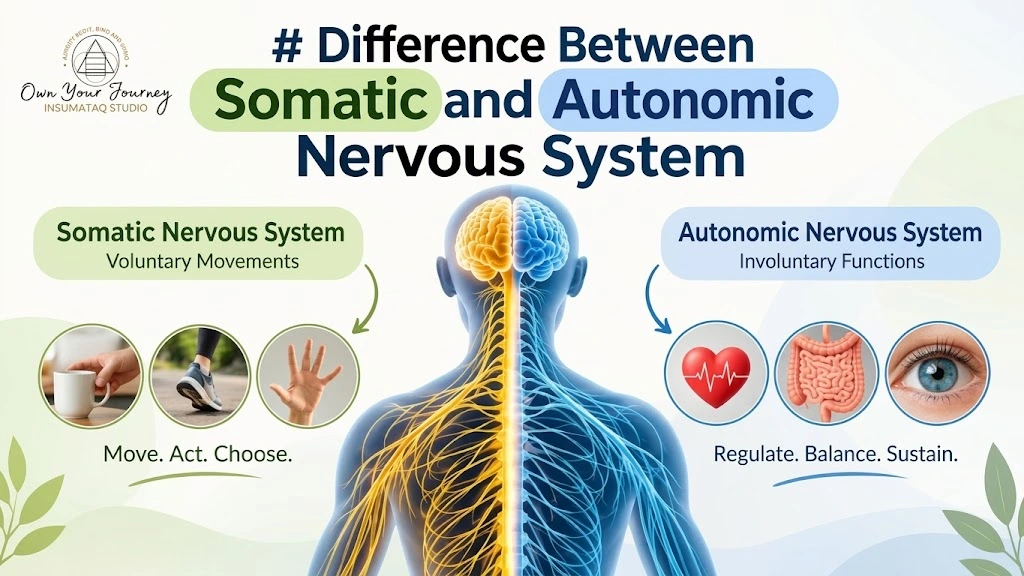
Breathing runs on autopilot and is one of the only autonomic functions a person can deliberately override. This means slowing the breath – especially the exhale – sends a direct signal to the parasympathetic nervous system (the part responsible for calming the body after a stress response). This is also why trying to think your way out of anxiety often doesn’t work as well. Because the racing mind isn’t the thing actually driving the physical state, the nervous system is.
7 Breathwork Techniques to Reset Your Nervous System
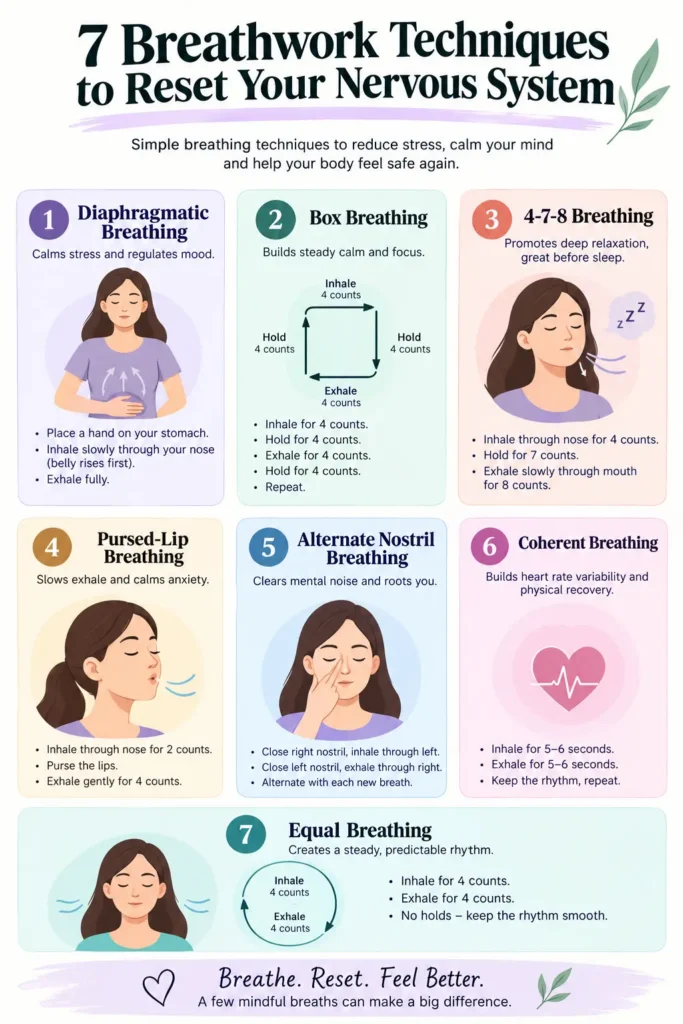
There are numerous breathing techniques that help you reset your nervous system, but none of them work the same way. Some are built for stress and mood regulation. Others work to strengthen your physical and respiratory health. Understanding the different types of breathwork will allow you to pick the one that’s meant to help you.
Diaphragmatic Breathing
Deep belly breathing gives the diaphragm room to fully expand, which sends a signal to the nervous system that it’s safe to downshift out of a stress response. To practice this deep breathing exercise for emotional regulation, place a hand on your stomach, inhale slowly through the nose so the belly rises before the chest moves, then let the exhale out fully.
Box Breathing
Equal counts on every phase of the breath (in, hold, out, hold) give the body a steady rhythm to lock onto instead of the erratic pattern anxiety usually creates. It’s the method first responders train on for exactly this reason: inhale for four counts, hold for four, exhale for four, hold for four, and repeat.
4-7-8 Breathing
The long exhale is what makes this one effective; it draws out the breath far longer than the inhale, which helps engage the body’s calming response more than a standard breath cycle would. Inhale through the nose for four counts, hold for seven, then release the breath slowly through the mouth over eight counts, making it a strong option to try before sleep.
Pursed-Lip Breathing
Breathing out through pursed lips forces the exhale to slow down, which directly counters the fast, shallow breathing that often shows up during anxiety. Inhale through the nose for two counts, then purse the lips and exhale gently for four counts, keeping the breath controlled rather than rushed.
Alternate Nostril Breathing
Switching airflow between nostrils gives the mind a single, simple point of focus, which is often enough to interrupt racing thoughts and settle mental noise. Close the right nostril and inhale through the left, then close the left and exhale through the right, alternating with each new breath.
Coherent Breathing
Slowing the breath to around five or six cycles a minute is linked to improved heart rate variability, one of the clearer physiological markers of how well the body recovers from stress. Inhale for five to six seconds, then exhale for the same count, moving straight from one to the other without pausing in between.
Equal Breathing
Keeping the inhale and exhale at the same length gives the body a steady, predictable pattern to settle into, which matters most when breathing has otherwise become erratic. Inhale for four counts and exhale for four counts, with no holds, keeping the rhythm smooth throughout.
Which Breathwork Technique Is Best for Different Situations?
Not all breathing techniques are going to help you unless you understand what your body actually needs to heal. The right breathwork techniques for your nervous system depend on what’s needed in the moment.
- For a sudden spike in stress – like before a meeting or a tense conversation – box breathing or pursed-lip breathing works well since they’re simple enough to do anywhere.
- For anxiety that’s making it hard to fall asleep, 4-7-8 breathing’s long exhale is better suited to winding down.
- Diaphragmatic breathing is the most versatile starting point for anyone new to breathwork, easy to learn and the foundation most other techniques build on.
Every technique has its own purpose and lands differently depending on the person, which is where guided support can go further than a self-taught practice alone. For anyone looking to explore breathwork more deeply, whether for ongoing anxiety or working through emotional patterns, Insumataq Studio offers guided somatic breathwork sessions suited to different needs and experience levels.
Conclusion
The nervous system responds to physical signals, and breath is one of the few you can control on purpose, which is exactly why these seven techniques work. The best part is no techniques require any equipment, training, or a quiet hour you don’t have – just a few minutes and the willingness to actually practice instead of just reading about it.
On your own, this is a real starting point. But breathwork tends to go deeper with guidance, with someone watching for what your body’s actually doing, adjusting the pace, and holding space if something comes up that a solo practice wouldn’t know how to handle. Insumataq Studio’s Deep Breathwork Journey offers a space for exactly that: a full somatic therapy experience built specifically around nervous system regulation and emotional release for anyone ready to take this further.
If anxiety has felt like something you’re managing entirely on your own, this doesn’t have to stay that way. Book a Deep Breathwork Journey session at Insumataq Studio to reset your nervous system with guided support, or explore Insumataq’s Personal Growth Retreats if you’re ready for something more immersive.