
What Is the Somatic Nervous System?
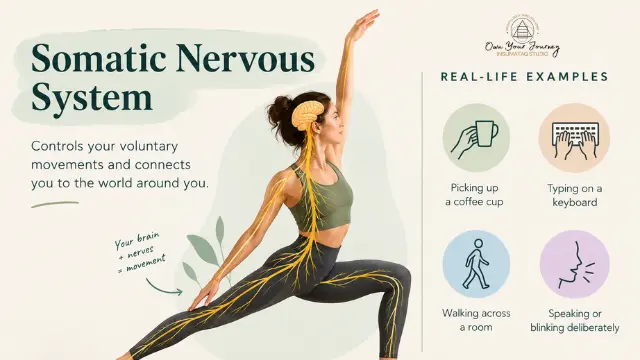
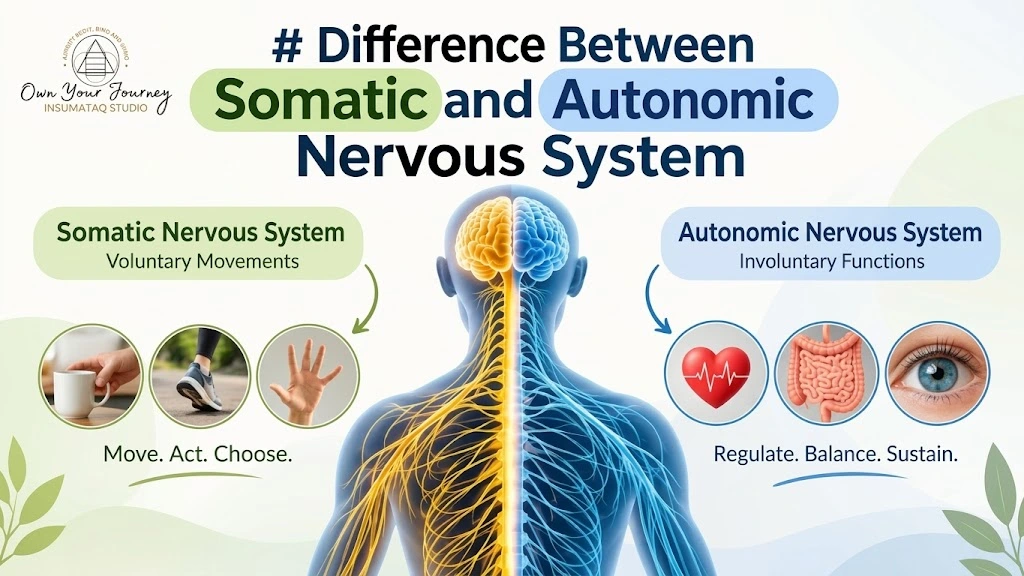
The somatic nervous system is responsible for everything you do on purpose. It carries sensory information touch, pressure, pain to the brain and sends movement signals back to the skeletal muscles in your arms, legs, and trunk. Reaching for something, pulling away from heat, choosing to stand up all of it runs through this system. It also governs one involuntary function: the reflex arc, which is what a doctor tests when tapping your knee with a rubber hammer.
What Is the Autonomic Nervous System?
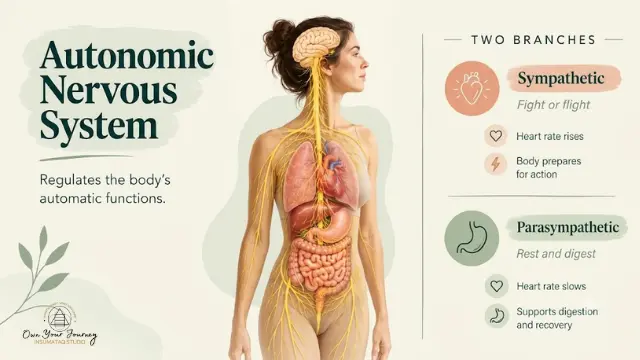
The autonomic nervous system runs without your input. It manages heart rate, digestion, blood pressure, and the body’s stress response continuously, in the background, without you deciding any of it. It works through two branches: the sympathetic (mobilizes the body under stress or threat) and the parasympathetic (handles rest, recovery, and digestion) both are always active, constantly adjusting to keep the body in balance.
Real-Life Autonomic and Somatic Nervous System Examples
The easiest way to understand the difference between the two systems is to see them in situations you’re already familiar with.
Somatic nervous system examples
- Picking up a coffee cup
- Typing on a keyboard
- Standing up and walking across a room
- Speaking, blinking deliberately, or shifting your posture
Autonomic nervous system examples
- Heart rate climbing when you’re anxious
- Digestion slowing during a stressful meeting
- Pupils adjusting to a dark room
- Sweating when you’re nervous or overheated
- Breathing carrying on while you sleep
Both systems working at the same time
When you go for a run, your somatic nervous system controls your leg movement. Your autonomic nervous system simultaneously raises your heart rate, increases blood flow to the muscles, and adjusts your breathing, without you directing any of it.
Somatic vs. Autonomic Nervous System: Key Differences
Both systems are part of the peripheral nervous system, but they serve fundamentally different purposes. Here’s how they compare:
| Feature | Somatic Nervous System | Autonomic Nervous System |
|---|---|---|
| Control | Voluntary | Involuntary |
| Function | Controls skeletal muscle movement | Regulates internal organs and glands |
| Consciousness | Requires conscious input | Operates without conscious awareness |
| Response speed | Fast and deliberate | Continuous and automatic |
| Affected by stress | Indirectly | Directly |
How Do the Somatic and Autonomic Nervous Systems Work Together
These two systems run alongside each other constantly, and what happens in one directly influences the other. Touch a hot surface and your somatic nervous system pulls your hand away while your autonomic nervous system spikes your heart rate without you deciding to. Both responses happen at the same time, triggered by the same moment.
When chronic stress keeps the autonomic system locked in fight or flight, the somatic system feels it too muscles stay tense, movement becomes restricted, and the body holds what it can’t release. That’s why conscious movement and breathwork can reach the autonomic nervous system indirectly. You use voluntary control to influence what normally runs on its own.
What Is the Connection Between the Nervous System and Stress
Stress isn’t just a mental experience. It’s a physiological one. When the brain perceives a threat, the autonomic nervous system activates the sympathetic branch, flooding the body with cortisol and adrenaline. The body prepares to fight or flee.
That response is useful in genuine emergencies. The problem is that modern stressors work pressure, financial worry, relationship tension trigger the same reaction without ever fully resolving it. Over time, the body stays in a state of low-grade activation that affects:
- Sleep quality and energy levels
- Digestive function
- Hormonal balance
- Muscle tension and physical pain
- Mood, focus, and emotional regulation
Chronic stress also creates physical patterns the somatic nervous system carries and repeats tight shoulders, shallow breathing, and a braced jaw. Releasing stored trauma from the body often starts with recognizing these patterns and learning to interrupt them through conscious movement and breath.
How Can Somatic Practices Support Nervous System Awareness
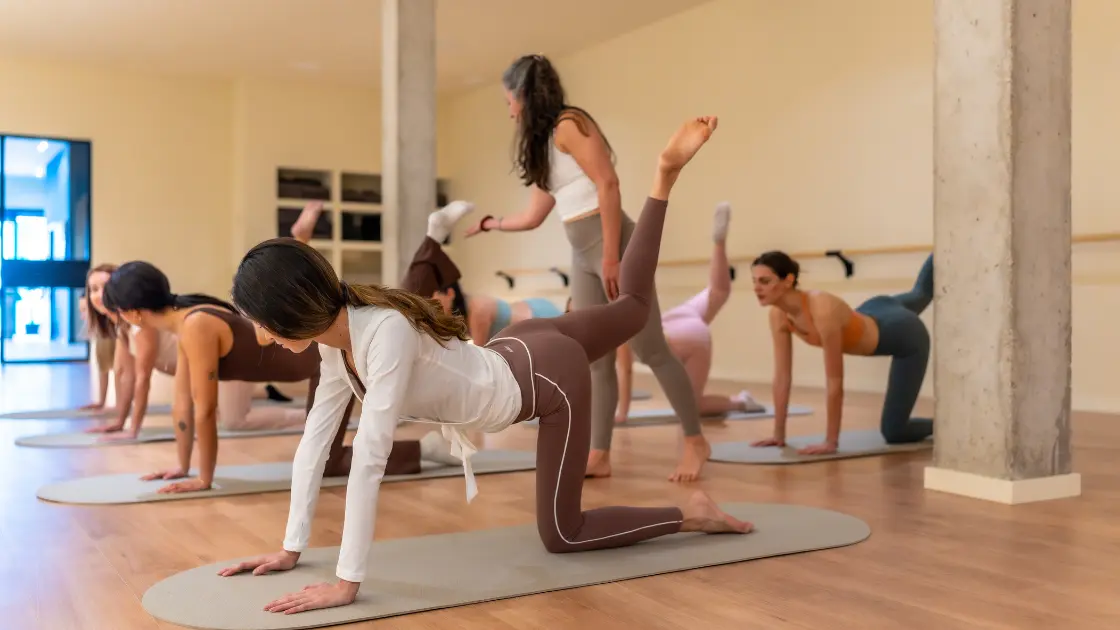
The nervous system responds to what the body does not just what the mind thinks. Somatic practices use that connection deliberately. Conscious movement, breathwork, and body awareness create signals the autonomic nervous system actually responds to, shifting it out of stress patterns it’s learned to default to.
This is what makes practices like somatic therapy different from talk-based approaches. They work with the body directly, helping people recognize and interrupt the physical patterns that chronic stress leaves behind. Some of the most effective ways to support nervous system awareness include:
- Breathwork that activates the parasympathetic branch and slows the stress response
- Mindful movement that brings conscious attention to where the body holds tension
- Body scanning to recognize stress patterns before they escalate
- Grounding practices that signal safety to the nervous system
For anyone whose nervous system feels stuck whether from ongoing stress, anxiety, or unresolved experiences understanding why the nervous system needs a reset is a practical first step toward changing it.
Conclusion
The somatic and autonomic nervous systems shape almost every experience you have how you move, how you respond to stress, how you sleep, and how you feel in your body day to day. Most people go through life without ever considering how these two systems work, or what happens when one of them gets stuck.
Understanding the difference is the first step. What you do with that understanding is where real change begins.
If you’re in Auburn, CA, and looking for a space that works with the body rather than around it, Insumataq Studio offers classes and events designed to support nervous system health through movement, breathwork, and somatic awareness. Visit one of the leading yoga studios in Auburn, CA, and experience it firsthand.
Explore upcoming holistic wellness events or book a wellness class in Auburn, CA today your first class is free.