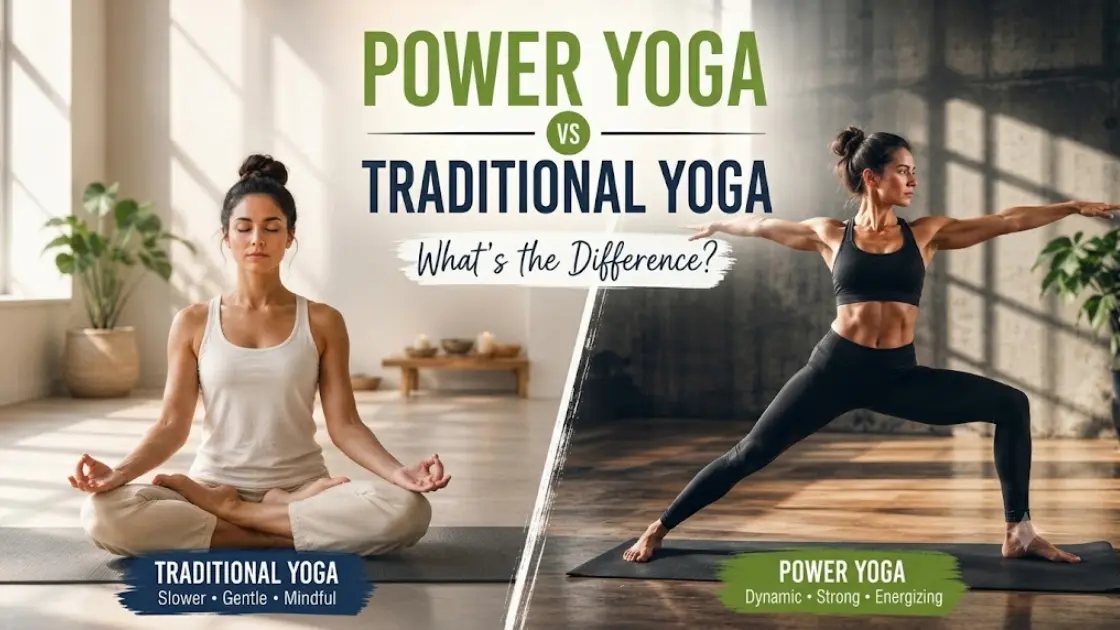

What Exactly is Power Yoga?
Power Yoga uses the same poses as traditional yoga. What’s different is how you move through them. One pose flows straight into the next, paced to the breath, which is exactly why a class can leave you as winded as a cardio session. A typical class includes Plank Pose, Chair Pose, and Four-Limbed Staff Pose – postures that build strength and raise your heart rate while your breath still leads the movement. Put simply, it’s yoga with the intensity turned up, sweat included, but that core idea never really goes away: the breath still leads the body.
How is it Different from Other Yoga?
Once you understand the meaning of Power Yoga, it’s easier to see where it actually sits compared to everything else on a studio schedule.
Yoga has grown beyond one traditional practice. Now, it involves a variety of styles – each created to support specific goals, from relaxation and flexibility to strength and mindfulness. To understand this better, traditional yoga is the slow, steady version most people picture first, where poses are held for longer periods along with breath work.
In Power Yoga, you work with many of the same poses; however, the pace and flow of the practice are different. Traditional yoga asks you to pause and settle; Power Yoga keeps you moving. Similarly, different types of yoga demand different levels of focus, movement, and energy, depending on what you want to achieve from your practice.
Traditional Kundalini yoga, for instance, isn’t really about the poses at all. It leans on chanting, breathwork, and repetitive movement to build energy, closer to a spiritual practice than a physical one. Buti Yoga goes a different way too. It blends yoga postures with dance and core work, so it feels more expressive than meditative. Hot yoga doesn’t change the poses at all; it simply takes an existing style and moves it into a heated room, letting the temperature do the work.
Key Difference Between Power Yoga vs. Traditional Yoga vs. Other Yoga
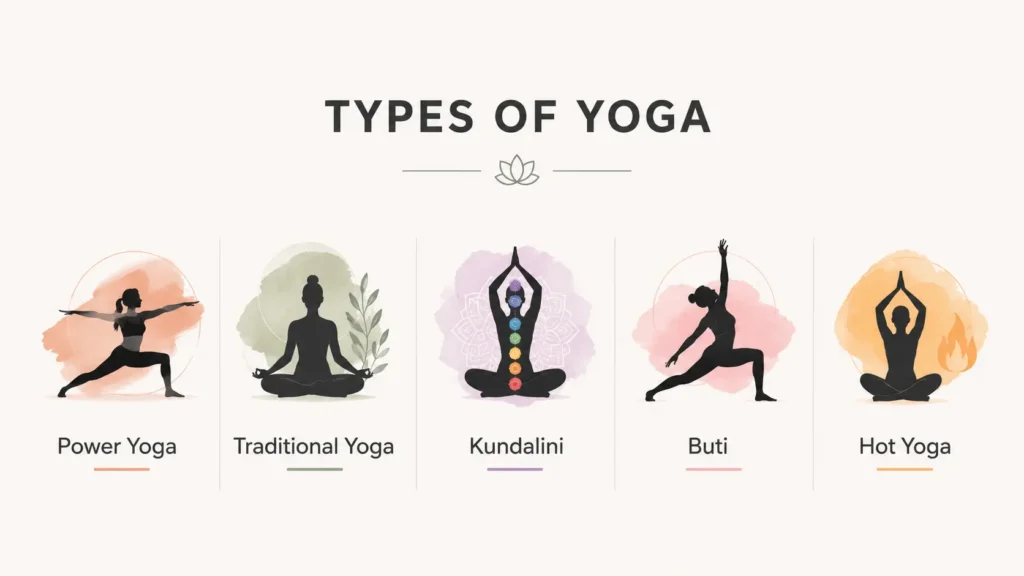
The table below breaks down Power Yoga vs. traditional yoga and a few other popular styles compared across the things that matter most when you’re picking a class: pace, focus, and what you’ll actually feel by the end of it.
| Power Yoga | Traditional Yoga | Kundalini | Buti | Hot Yoga | |
|---|---|---|---|---|---|
| Speed | Fast, flowing | Slow, held poses | Rhythmic, repetitive | Fast, dance-like | Depends on the style practiced |
| Primary Focus | Strength and cardio | Alignment and stillness | Energy and spirituality | Expression and core work | Heat-driven intensity |
| Breath Role | Paces the flow | Anchors the stillness | Often the main technique itself | Supports the movement | Same as the base style, just hotter |
| Physical Intensity | High | Low to moderate | Low | High | High |
| Feels Like | A workout | A slow reset | A ritual | A dance class | A sweaty version of any style |
| Best Suited For | Building strength | Slowing down and reconnecting | A spiritual, energy-based practice | Feeling free and energized | Pushing your limits |
No single row here makes one style “better” than another; they’re just built for different things. Someone craving stillness and breathwork is going to have a very different experience in a Power Yoga class than someone craving a sweat-soaked, strength-building hour. Once you can see the differences laid out this clearly, choosing between them usually comes down to one honest question: what does your body actually need right now?
The Benefits of Power Yoga
Power Yoga’s benefits come from stacking strength work – cardio, and breath control into one practice. Poses flow quickly from one to the next, so your heart rate stays up longer than it would in a slower class, and that’s really where a lot of the physical payoff comes from.
But because you’re moving constantly, your attention stays locked on your breath and body too, so the mental benefits aren’t some separate bonus tacked on at the end. They show up right alongside the physical ones.
The benefits you get from practicing Power Yoga poses are.
- Builds functional strength in your core, legs, and shoulders
- Improves cardiovascular endurance through continuous, bodyweight-based movement
- Increases flexibility over time with consistent practice
- Supports stress relief through steady, rhythmic breathwork
- Sharpens focus and body awareness by keeping your attention on alignment and timing
Together, these benefits make Power Yoga a practice that works your body and settles your mind in the same hour, without asking you to separate the two.
Five Power Yoga Poses for Beginners
Reading about the benefits is one thing; feeling them is another, and that starts with getting familiar with the poses themselves. These five show up in almost every Power Yoga class, so learning the basics now means you’ll walk in feeling ready instead of lost.
Plank Pose (Phalakasana)
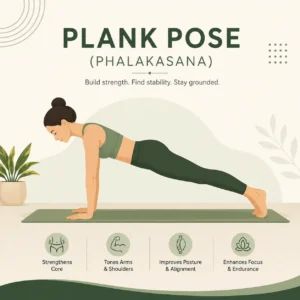
Plank pose requires you to hold a push-up position with your wrists under your shoulders and your body in one straight line.
Chaturanga (Low Plank)
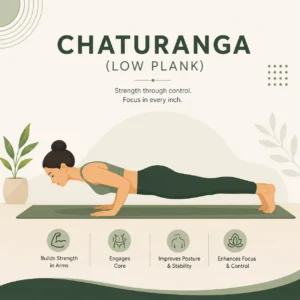
From Plank, bend your elbows and lower them halfway, keeping them close to your ribs.
Warrior III (Virabhadrasana III)

Balance on one leg while hinging forward and extending the other leg back. It challenges your balance and works your standing leg.
Chair Pose (Utkatasana)

Bend your knees and lower your hips like sitting into an invisible chair, arms overhead.
Side Plank (Vasisthasana)

From Plank, shift onto one hand and the outer edge of one foot, lifting your hips with your other arm reaching up.
Most Power Yoga classes move through variations of these same five poses, just linked together faster and with less pause in between, so the familiarity you build here transfers directly to the room. Showing up with even a rough sense of the shapes your body needs to make takes a lot of the guesswork out of your first class and lets you focus on keeping pace rather than figuring out form from scratch.
How to Start Your Power Yoga Journey
Choose a beginner-friendly or all-levels class rather than an advanced one, since instructors tend to slow down and cue modifications, giving you room to learn without feeling rushed.
Wear something that stretches with you, since there’s a lot of movement involved, and bring a sticky mat if you can, since good grip matters once you’re moving through transitions like Plank and Side Plank. Showing up a few minutes early to introduce yourself to the instructor also helps, since letting them know you’re new means they can watch your form and step in with modifications when needed.
Consistency matters more than intensity when you’re just getting started. One or two classes a week for a month will teach your body far more than a single hard session followed by weeks off, since this style of practice rewards familiarity built through repetition. If you’re in the Auburn, Roseville, Nevada City, Grass Valley, Loomis, Rocklin, or Granite Bay area, Insumataq Studio offers yoga alongside a range of other mind-body practices, so you can find the pace that actually fits where you are right now.
Conclusion
Power Yoga isn’t about pushing yourself until you’re exhausted; it’s about building strength, steadying your breath, and learning to stay present even when the pace picks up. Whether you’re drawn to it for the physical challenge or the mental clarity that follows, the poses and practices covered here give you a real starting point, one you can return to and build on with every class.
If you’re curious about a gentler approach before diving into something faster-paced, our Somatic Yoga vs Traditional Yoga post is worth a read too; it breaks down a slower, more restorative style that might be a better fit depending on where you’re at.
Ready to see what feels right for your body? Come visit us at Insumataq Studio, a yoga studio in Auburn, where yoga is just one part of a bigger journey toward feeling steadier, stronger, and more at home in yourself.