
Table of Contents
If you’ve ever explored yoga long enough, you know it’s far more than downward-facing dog and flexibility. There’s a big world beneath the surface, and Kundalini yoga lives deep in it.
Kundalini yoga has been around for centuries, long before wellness became an industry. But lately, more people are finding their way to it. The reason? It is beyond chanting, breathing in patterns that sound almost forceful, and repeating the same movements. Kundalini works differently. It’s nothing like what you’d picture if someone said the word “yoga.”
Most modern yoga builds strength and flexibility, things you can see and measure. Kundalini moves through your breath, your nervous system, and your mind. At its core is the idea that there’s an energy sitting dormant at the base of your spine, coiled and waiting. The practice exists to wake it up. This blog helps you explore deeper into kundalini yoga. “You’ll get to what it is, the benefits, how it differs from other practices, and more.
What Does Kundalini Mean?
“Kundalini” comes from the Sanskrit word “kundal,” meaning coiled. The idea is that every person carries a dormant energy at the base of their spine, coiled there like a spring that has never been released.
In yogic philosophy, this is the body’s most primal life force. It doesn’t do much on its own. But when the right conditions are created through kriyas, breathwork, and meditation, it begins to move. It travels upward through the spine, and through each chakra, and that movement is what practitioners describe as transformation: physically, mentally, and in how deeply aware they feel of their own lives.
What is Kundalini Yoga?
Kundalini yoga is a practice that works on you from the inside out. Where most yoga styles focus primarily on the body, Kundalini brings together physical postures, breathwork, mantra, mudras, and meditation into structured sets called kriyas. Each combination is intentional, designed to produce a specific effect on the nervous system, the glands, or the mind.
Yogi Bhajan introduced it to the West in 1969, and while its roots go back centuries within the Sikh and Tantric traditions of Northern India, what he made available was something previously taught only within closed lineages.
How Does It Differ from Other Yoga?
Most yoga styles you’ll come across, Hatha, Vinyasa, and Ashtanga, start with the body. You move. You stretch. You build strength. And somewhere in that process, the mind settles. Kundalini works in the opposite direction. It starts from within and works outward.
The structure is also unlike anything you’ll find in a regular studio class. Vinyasa teachers can get creative with sequencing. Kundalini doesn’t work that way. The kriyas (pre-designed sequences) are fixed and precise, specific movements held for specific durations, because the result depends entirely on the exactness of the combination.
And what goes into a single session is broader than most styles. Breathwork, movement, mantra, mudras, and meditation, not layered on top of each other but woven together into one set, each element doing its part toward a specific effect on the body and the mind.
The Benefits of Kundalini Yoga
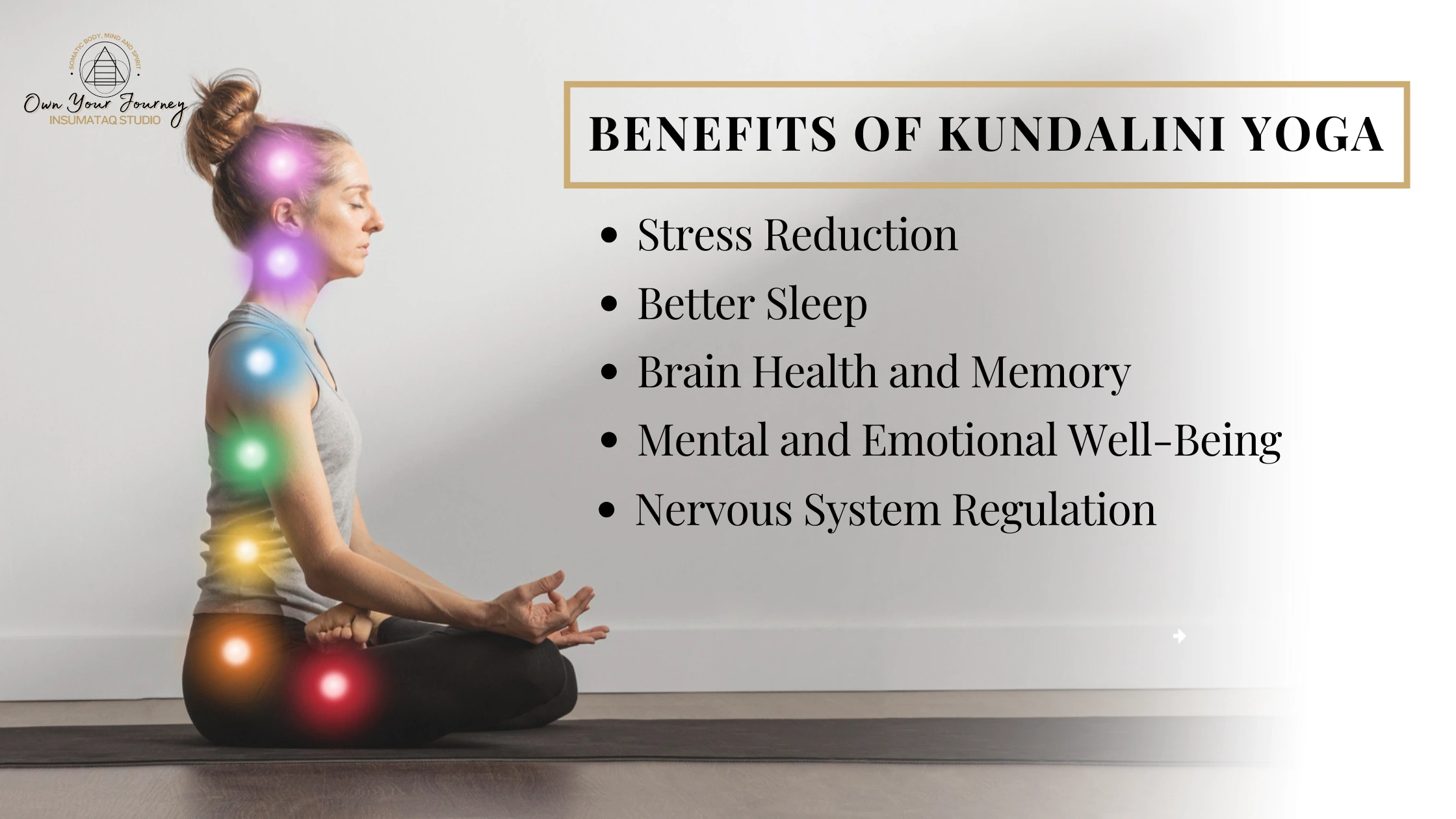
Kundalini yoga does more than most people expect from a yoga practice. The benefits are physical, neurological, and psychological, and a growing body of research backs them up.
Stress Reduction:
Research showed immediate reductions in cortisol after a single Kundalini class, with long-term decreases in perceived stress after three months of consistent practice.
Better Sleep: A randomized trial found Kundalini yoga improved sleep-onset insomnia more effectively than a standard sleep-hygiene program, with benefits lasting six months.
Brain Health and Memory: A 12-week UCLA study found measurable improvements in memory, along with anti-aging and anti-inflammatory effects in the brain.
Mental and Emotional Well-Being: A 2024 study with university students reported meaningful improvements in self-compassion and overall psychological well-being.
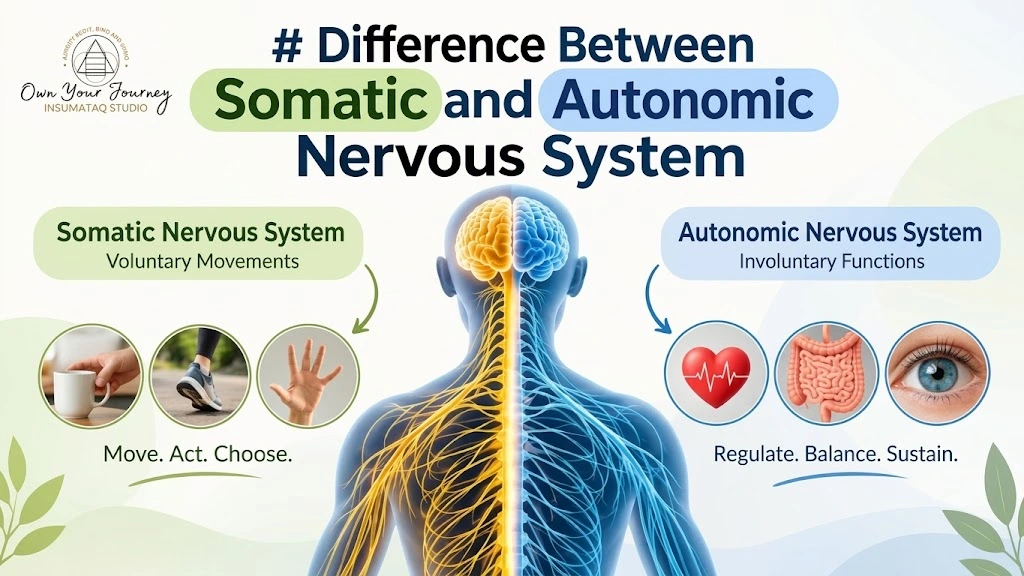
Nervous System Regulation: The specific breathwork used in Kundalini kriyas directly stimulates the vagus nerve, shifting the body out of stress responses and into recovery.
What makes this noteworthy is that these aren’t subtle, hard-to-measure outcomes. They show up in controlled trials, in brain scans, in cortisol levels. The practice is old, but the evidence is current. For something that asks only 20 to 40 minutes of your day, the return is difficult to argue with.
How to Start Your Kundalini Yoga Journey?
You don’t need prior yoga experience to start Kundalini. You don’t need to be flexible, fit, or spiritually inclined. What you do need is consistency and a willingness to follow the practice as it was designed.
A few things that will help you begin:
Find a certified teacher
The breathwork in Kundalini is precise and can be strong. Qualified practitioners (like the one you’ll find at Insumataq Studio) will make sure you’re not pushing beyond what your body is ready for.
Let it feel strange
The chanting, the breathing patterns, the repetitive movements, none of it will feel natural in the beginning. That’s not a problem. That’s just the beginning. They are all part of the process.
Start small
Beginner kriyas run between 11 and 31 minutes. You don’t need to do more than that to feel the effects. Because the change doesn’t become visible immediately. It takes time.
Trust slow progress
The first few weeks are subtle. Sleep improves, the mind steadies. The bigger shifts come later, over months of regular practice.
Most people expect transformation to arrive as a dramatic moment. In Kundalini yoga, it rarely does. It shows up in smaller ways, in how you respond to something that used to derail you or how you wake up one morning simply feeling more like yourself.
As a beginner, these are the Kundalini core practices you will encounter in almost every session:
Kundalini Pranayama: Controlled breathing techniques that regulate the nervous system and influence how the body responds to stress. The two most fundamental are Long Deep Breathing, which slows and deepens the breath through the nose, and Breath of Fire, a rapid, rhythmic breath through the nose that builds energy and focus.
Kundalini Kriyas: A fixed sequence of movement, breath, and sometimes mantra combined in a specific order. Each kriya is designed with a particular outcome in mind, whether that’s calming the nervous system, building focus, or releasing tension the body has been holding.
Kundalini Mantra: Words or sounds repeated aloud or under the breath. The repetition isn’t decorative. It gives the mind something steady to anchor to, which is harder than it sounds and more useful than most people expect.
Kundalini Mudras: Hand and finger positions held during breathwork or meditation. In yogic tradition, they are believed to influence how energy moves through the body.
Kundalini Meditation: A seated practice that anchors the session. It typically combines breath awareness, mantra, and stillness, and is where much of the integration of the session takes place.
None of these practices is complicated to learn. What takes time is learning to do them with the attention they require. That shift, from going through the motions to actually being present inside the practice, is where the real work begins. And for most people, it’s also where things start to change.

Get Started with Your Journey Today!
Knowing about Kundalini yoga and actually experiencing it are two very different things. At some point, the reading has to stop, and the practice has to begin.
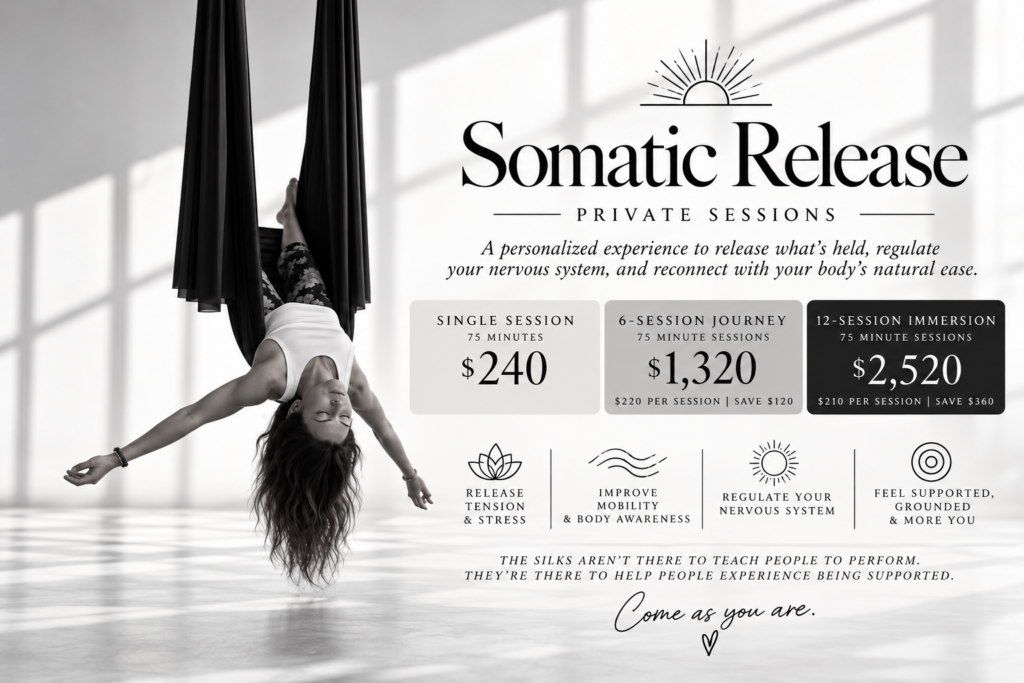
At Insumataq Studio, Kundalini yoga sits alongside breathwork, somatic movement, sound healing, and meditation. These aren’t separate offerings stacked on top of each other. They work together, each one supporting the other, because the body and mind don’t heal in isolated compartments.
What we focus on here is simple: helping you feel better inside your own body. Not performing wellness, not checking boxes, but actually shifting something. The nervous system, the breath, the way you carry stress, the way you sleep, the way you show up in your own life.
If something in this resonated with you, the door is open. Insumataq Studio is built for people who are ready to stop reading about change and start feeling it. Your first session might surprise you more than you expect.
Frequently Asked Questions (FAQs)
White is believed to expand the aura and act as a protective energy field around the body. It also represents clarity and consciousness. However, it is a tradition, not a requirement, especially for beginners.
It works directly on the nervous system, the glands, and the mind. Regular practice has shown measurable improvements in stress levels, sleep quality, mental clarity, and emotional regulation. It addresses what most people carry in their bodies, not just their thoughts.
Even three sessions a week can produce noticeable shifts within the first month. Daily practice, even for 20 minutes, tends to produce the most consistent results. Consistency matters more than duration.
A typical class opens with a tuning-in mantra, moves into a kriya, which is a set of specific movements and breathwork, and closes with meditation. The entire session usually runs between 60 and 90 minutes. Each class targets something specific, so no two kriyas feel the same.
It is the moment the dormant energy at the base of the spine becomes activated and begins moving upward through the chakras. The experience varies from person to person.