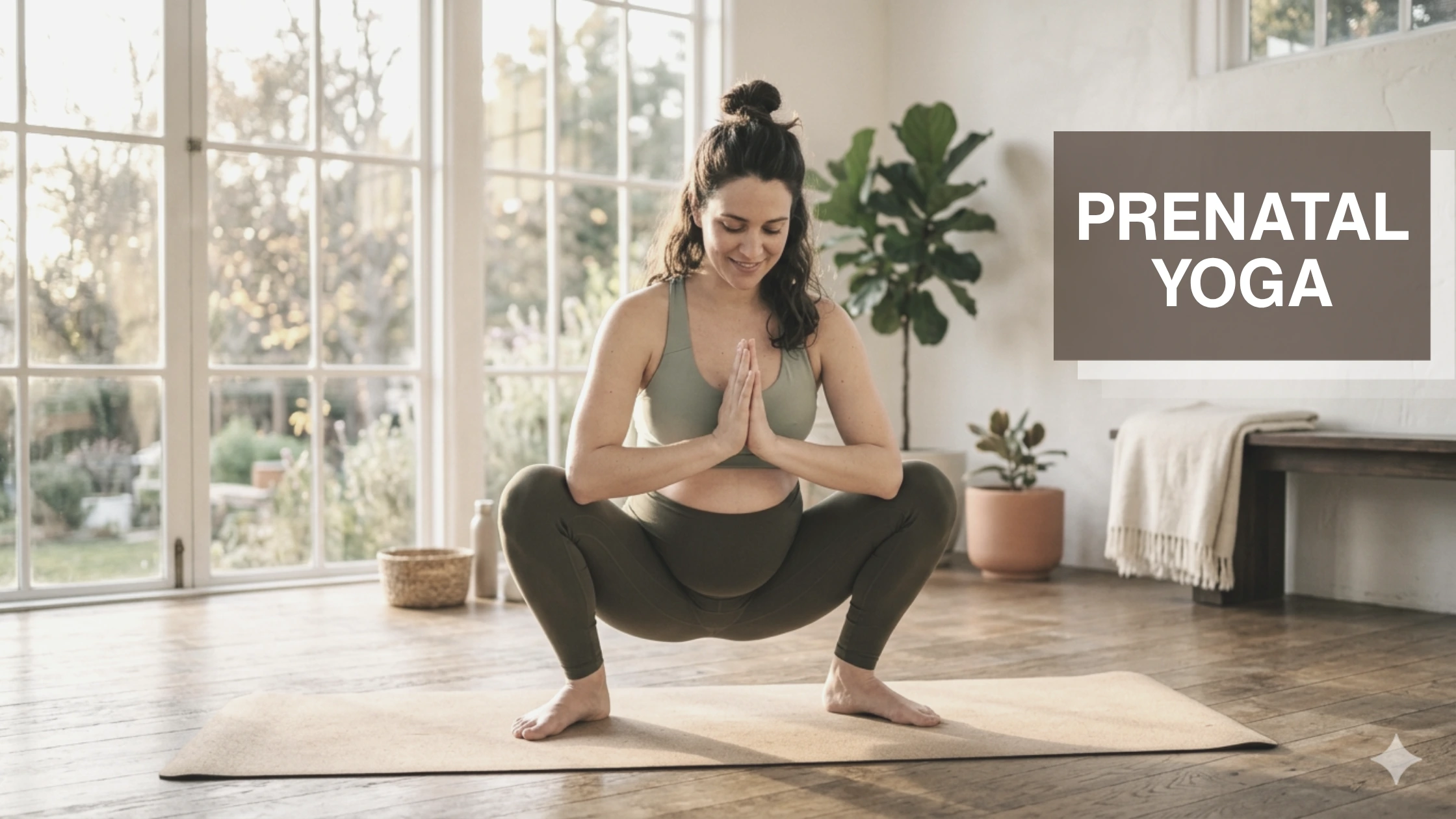

Most pregnancy advice tells you what to expect, avoid, and take care of. But very little of it tells you what you can do to prepare yourself for labor.
That advice prepares you mentally, but not physically. And labor demands real physical preparation. Prenatal yoga is one of the few things built specifically around that. It’s a practice built around what labor physically demands from your body: an open pelvis, a strong and flexible pelvic floor, and a breath that holds steady when the contractions come hard and fast.
Women who practice through their second and third trimesters consistently report less pain during labor. If you’re here to explore more on how you can prepare your body for labor and birth, you’re in the right place. This guide walks you through everything you need to know about prenatal yoga poses and how to start your journey.
What is Prenatal Yoga?
Prenatal yoga is a yoga practice designed specifically for pregnancy. Every prenatal yoga pose and breathing technique here is chosen with one thing in mind: preparing your body for labor and birth.
Because labor places very specific demands on the body, prenatal yoga works on the areas that matter most. It builds pelvic mobility so your body can open during delivery. It strengthens and trains the pelvic floor to bear the weight of pregnancy without breaking down. It works on fetal positioning to help your baby settle into the most favorable place for birth. And it builds a Mindful breathing practice you can actually rely on when contractions hit.
The prenatal yoga poses are also modified to work around your growing belly, making sure nothing ever puts pressure on your abdomen.
Benefits of Prenatal Yoga
Most prenatal fitness advice stops at “stay active, eat healthy, and listen to your body.” Prenatal yoga goes further than that. Practiced consistently through pregnancy, it prepares the body in ways that actually show up during labor.
Lower back and pelvic pain relief
Pregnancy shifts your posture gradually, and the spine responds by holding itself in one compressed pattern for longer stretches. Prenatal yoga keeps the hips and lower back moving through small and intentional ranges so that fixed and locked feeling never fully sets in.
Labor position readiness
Squatting, upright leaning, and frequent position changes are movements your body may rely on heavily during labor. Practicing them regularly builds the strength and endurance these positions actually require.
Pelvic floor release control
Most people think of the pelvic floor only in terms of strength. During labor, the harder skill is releasing it fully under pressure. Prenatal yoga trains both sides of that, so the body already knows how to let go instead of bracing against what’s coming.
Breathing under strain
When contractions intensify, breathing is the first thing to go. It shortens and holds, which only adds to the tension the body is already carrying. Prenatal yoga trains the breath to stay open even when the abdomen feels full and tight, building that pattern in long before labor begins.
Hip and inner thigh mobility
Stiffness in the inner legs and hips builds quickly as pregnancy progresses, and it directly affects how comfortable wide stance and deep squat positions feel. Consistent movement through these areas keeps them from reaching the point where opening feels like a fight.
Reduced full-body bracing
Under discomfort, the jaw, belly, and pelvic floor tend to clench together without any conscious decision. Prenatal yoga interrupts that chain response repeatedly, giving the body a trained alternative to locking down when sensation rises during labor.
Healthy weight management
Prenatal yoga offers a form of physical activity low-impact enough to sustain through all three trimesters, keeping circulation moving, muscles active, and overall fitness at a level that supports both pregnancy and recovery after birth.
How Prenatal Yoga Helps During Labor?
Labor isn’t something you think your way through. It’s something your body has to already know how to do. Besides improving your mental well-being, pregnancy yoga poses prepare you for three things that directly shape how labor unfolds: how your body moves, how your breath holds, and whether your pelvic floor can release when it needs to.
Movement
Labor rarely stays in one position. When one position stops working, the body needs to shift (quickly). What prenatal yoga builds is familiarity and real muscle endurance in the positions labor most commonly demands: squatting, upright leaning, wide stances. A body that has spent months practicing these yoga positions for pregnancy can hold them and move between them with far less effort than one encountering them for the first time under contraction.
Breathing
Pain contracts the breath. When a contraction peaks, the instinct is to hold, tighten, and brace. That response is automatic unless something has been trained to replace it. Maternity yoga poses build a breath pattern that stays open under pressure, not because you remember to breathe, but because the body has practiced it enough times that it becomes the default response instead of holding your breath.
Pelvic Floor Release
The pelvic floor plays an active role throughout labor, but during the pushing phase it needs to stretch and yield as the baby descends. What breaks down under pressure is the ability to consciously release it, because the natural response to intensity is to grip. When that release isn’t available, it creates unnecessary resistance during the phase that demands the most from your body. Prenatal yoga trains release specifically under effort, which is the only condition that actually matters. Many women also combine prenatal yoga with sacred womb healing practices to deepen their connection with the pelvic space, release stored tension, and cultivate a greater sense of trust in their body’s natural birth process.
Understanding what prenatal yoga does during labor is important. But knowing when and where to begin is even more crucial. Because this one decision shapes what you can work on and how much your body can adapt before labor arrives. And the answer to when you should begin depends on which trimester you are in.
Which Trimester Should You Start Prenatal Yoga?
It’s never too early or late to begin your prenatal yoga journey. Wherever you are in your pregnancy, there is something prenatal yoga can do for you. The trimester you start in shapes the practice, not the value of it.
Prenatal Yoga in the First Trimester
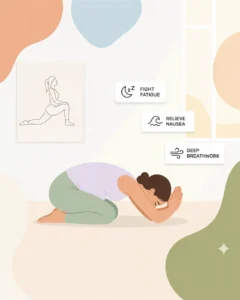
Most women are not thinking about yoga in the first trimester. They are thinking about getting through the day. Because during this stage, fatigue hits harder and nausea comes and goes without warning due to hormonal fluctuations. Prenatal yoga in the first trimester works around what the body can actually handle. Sessions are shorter, positions stay upright, and breathwork takes the lead.
Prenatal Yoga in the Second Trimester
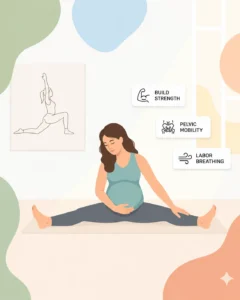
This is where most women feel ready. Because nausea settles, energy comes back, and movement stops feeling like a negotiation with your own body. The belly is growing but not yet limiting. This makes it the most productive window of the entire pregnancy. Your body can still move freely enough to work on the things that labor will actually demand from it: strength, pelvic mobility, hip flexibility, and a breathing pattern that holds under pressure. If there is one trimester to commit to showing up consistently, this is it.
Prenatal Yoga in the Third Trimester
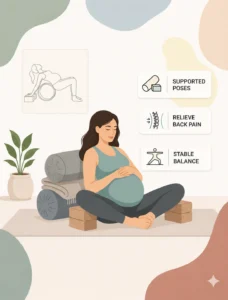
Almost every activity takes more effort in this stage. Balance shifts. The belly is bigger. By the third trimester the body has its own demands, and the practice listens to them. Props support what needs supporting, stances widen to keep balance steady, and the pace slows down. With prenatal yoga in the third trimester, the focus shifts from preparation to preservation, keeping the hips mobile, the lower back loose, and the breath as open as possible heading into labor.
Now that you know when to start, the next question most women ask is which prenatal yoga poses actually do the work. Specifically, which ones open the pelvis and help the baby move into position for birth.
Which Poses Open the Pelvis and Help the Baby Drop?
These three prenatal yoga poses come up in almost every prenatal yoga practice for a reason. They target the areas that matter most when the body is preparing for labor.
Malasana (Garland Pose)
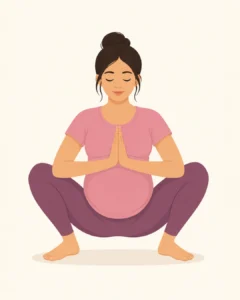
Sitting into a deep squat is one of the most natural positions for birth. And Malasana is essentially that. It opens the hips. It creates space in the pelvis. And it also takes pressure off the lower back that builds through late pregnancy.
Upavistha Konasana (Wide Angle Seated Forward Bend)
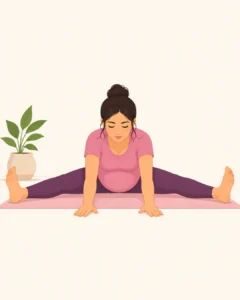
You sit with your legs spread wide and fold gently forward. This stretches the inner thighs and groin, which are the muscles that tighten when the pelvis tries to open. When these muscles are more flexible, delivery becomes less of a struggle for the body. It also eases the tension that builds in the lower back and spine as the belly gets heavier.
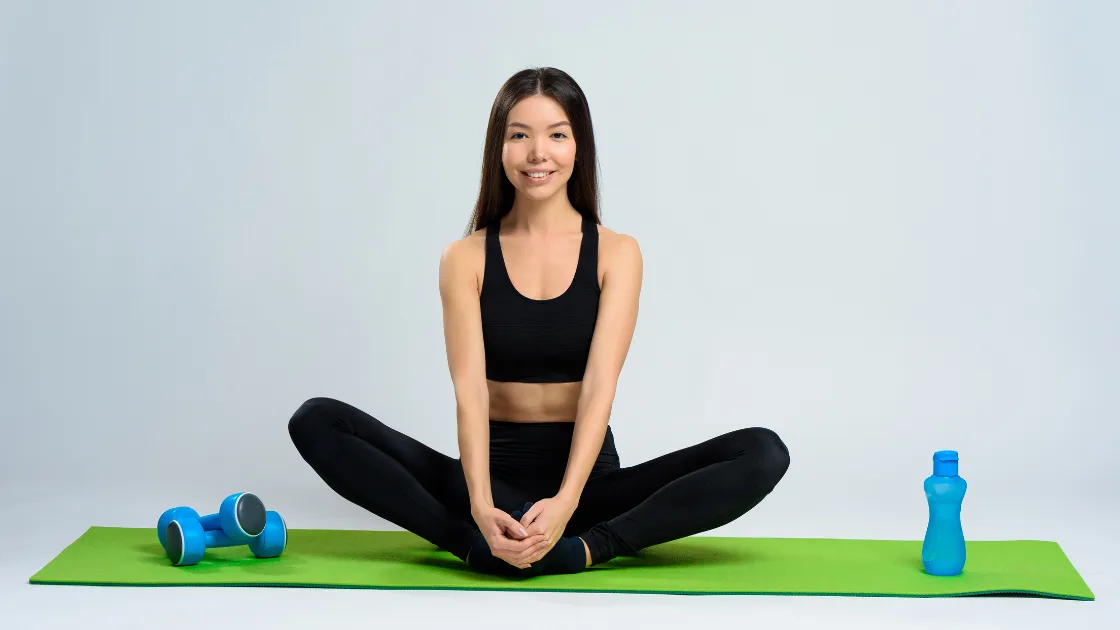
Baddha Konasana (Bound Angle Pose)
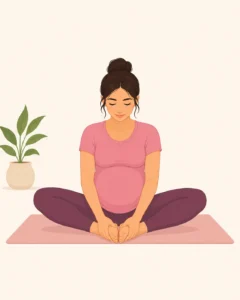
Soles of the feet together and knees falling open. It’s simple in setup but specific in what it does. It stretches the inner groin and encourages the pelvis to relax. It also improves circulation through the pelvic region, all of which become more important the closer you get to labor.
Learning these poses from a description only goes so far. A prenatal yoga class teaches you how to actually feel them working and how to modify them safely as your body changes.
Which Poses Build the Strength and Endurance Labor Demands?
Labor is not a single moment. It is hours of sustained effort, repeated position changes, and staying active through waves of intensity. These prenatal yoga poses for pregnancy build the specific kind of strength and endurance that makes that manageable.
Warrior II (Virabhadrasana II)
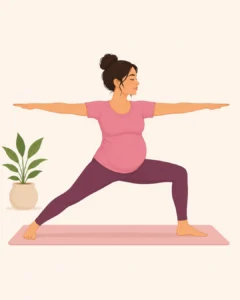
You stand with your legs wide, front knee bent, arms extended, and you hold. That is essentially what Warrior II asks of you. It builds endurance in the legs and hips in exactly the kind of wide, grounded stance the body relies on during labor.
Goddess Pose (Utkata Konasana)
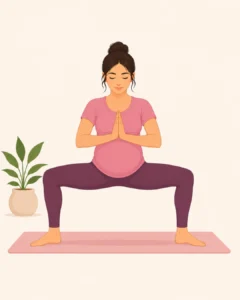
A wide squat with the knees turned out and the spine tall. This pose strengthens the inner thighs, glutes, and pelvic floor all at once while keeping the hips open. It is one of the closest things prenatal yoga has to a direct rehearsal for labor positions.
Low Lunge (Anjaneyasana)
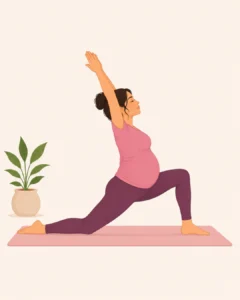
Low lunge trains the body to hold and move through asymmetrical positions comfortably, strengthening the hip flexors and legs while opening the front of the hips. It also builds the kind of single-leg stability that weight shifting during labor demands.
Ultimately, prenatal yoga classes show you how to do each in the right way as well as guide you on how long to hold them safely at each stage of pregnancy.
How To Start Your Prenatal Yoga Journey?
Reading about prenatal yoga and actually practicing it are two very different things. Most women who try on their own are never quite sure if they are doing it correctly. That uncertainty is what makes a guided class worth it.
When you practice with an instructor who understands pregnancy, the guesswork and doubt disappear. Someone is there to watch you, adjust you, and make sure what you are doing is actually serving your body at the stage you are in, not just a generic yoga class with a few modifications thrown in.
Prenatal yoga classes take you further than any guide can. An instructor who understands pregnancy will watch how you move, correct what needs correcting, and adjust the practice to where you are, not where you think you should be. That is what turns preparation into something real.
Conclusion
Ultimately, prenatal yoga is not about being flexible or experienced or having the perfect practice. It is about showing up for your body consistently enough that when labor comes, it already knows what to do. The breath stays open. The pelvis can move. The body does not lock down under pressure.
That preparation does not happen from reading about it. It happens on the mat, week after week, with guidance that understands exactly what your body is going through.
Insumataq Studio is a yoga and meditation center in Auburn offering in-person classes in a grounded, supportive space. You’ll be guided by instructors who observe each individual closely and help you develop a practice that feels natural, safe, and sustainable.