
Have you ever heard people talking about somatic and comparing it to traditional yoga?
Somatic yoga and traditional yoga aren’t the same. However, both involve movement, breath, and the body on the surface. They invite you into different conversations with yourself and your body. Traditional yoga often focuses on perfecting poses and building strength or flexibility, as well as encourages you to follow set sequences.
But somatic yoga is all about slowing down and tuning inward. You pay special attention to the small feelings and how your body really feels. It’s less about perfecting technique or getting every pose or movement exactly right. Instead, it emphasizes tuning in to how your body feels, what it needs, as well as how it naturally wants to move or release tension. This is the core of what you can explore in somatic movement yoga classes in Auburn at Insumataq Studio.
This blog highlights the key differences between somatic yoga and traditional yoga. If you’re looking to start your journey with either one, this information will help you make the right decision.
Understanding Somatic Yoga
If you break the term down, “soma” is a Greek word that means the living body (the body as experienced from the inside). It shifts the priority from outward form to internal sensation. In somatic yoga classes, that means slow and intuitive movements, pauses, as well as subtle transitions, rather than pushing towards extremes.
Somatic yoga is especially beneficial to those dealing with chronic pain, stress, or trauma. You begin to notice habitual tension, stress, and pain that your body has stored. With practice, you release that stored tension from your body and retrain your nervous system with greater ease by moving slowly and attentively. The best part is it’s not about pushing your limits. It’s about listening to your body and honoring its needs.
To put it simply, somatic movements gently speak the language of your nervous system, encouraging it to let go of these old patterns. It’s less of a workout and more of a subtle “inner tune-up,” leaving you feeling more open, aware, and wonderfully at home in your own skin.
Understanding Traditional Yoga
When most people think of yoga, they picture graceful poses, steady breathing, and that calm “zen” feeling afterward. Traditional yoga is exactly that, but so much more. However, it doesn’t stop at the mat. It’s rooted in ancient philosophies as well as practices passed down through generations. Also, it blends movement, breath, meditation, as well as ethics in a holistic system.
Traditional yoga is all about how you live and how you align your inner world. On a practical level, you’ll recognize traditional yoga by its emphasis on asanas (poses done with care and alignment), pranayama (breath regulation), as well as meditation woven through the practice.
Traditional yoga is different from a typical workout; the goal isn’t to burn the most calories or cool down quickly. Instead, it focuses on steady growth, cultivating awareness, and creating a sense of balance. It’s an “outside-in” approach: you use physical discipline to create a calm, focused, as well as disciplined mind. You build strength, increase flexibility, and cultivate a sense of inner steadiness.
So, while you’re working your muscles, you’re also training your attention, plus preparing for deeper meditation. To sum it up, traditional yoga is a powerful as well as time-tested system for building resilience from the inside out.
Key Difference Between Somatic Yoga & Traditional Yoga
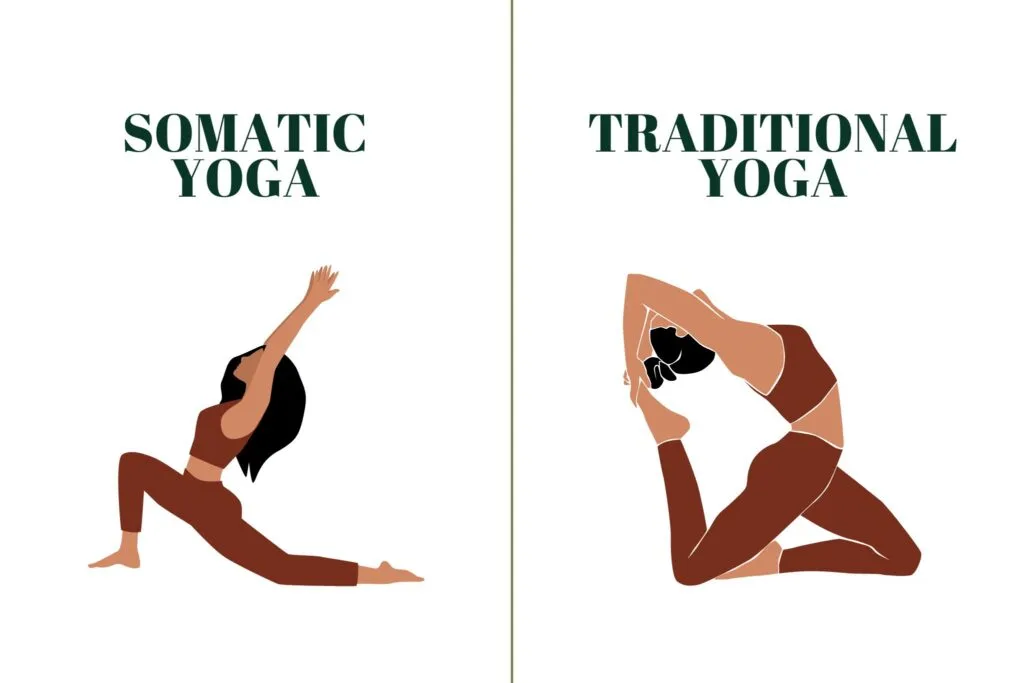
Now that we’ve met both practices, let’s understand how they are actually different.
Traditional Yoga works from the outside in:
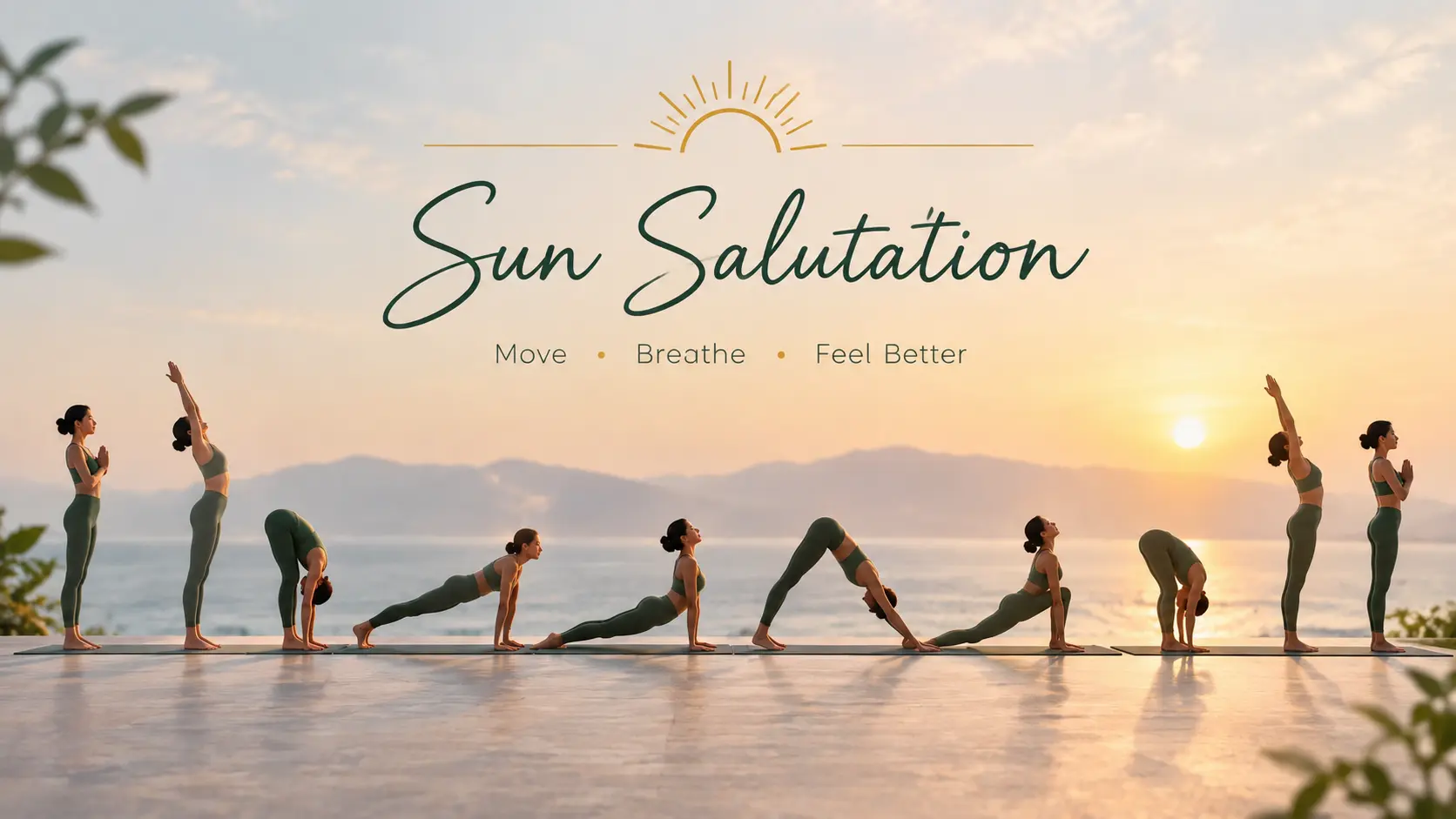
In traditional yoga, the focus is on the form itself, like achieving a stronger, more flexible, as well as disciplined body to support a calm mind. It’s practice of doing. You actively move your body into specific shapes (such as Tree Pose or Sun Salutation). You’re building a more capable and resilient body from the outside, using discipline and strength to create a container for a quiet mind. You leave a traditional practice often feeling accomplished, energized, and more open.
Somatic Yoga works from the inside out:
It’s more like a gentle detective exploring the inner landscape of your own body. It’s a practice of being and feeling. In somatic yoga classes, instead of forcing your body into a pose, you use subtle, internal movements to explore the territory of a pose. You make tiny and almost imperceptible movements in your hip socket to discover where tension truly lives, then consciously release it. To put it simply, you gently connect with your body and nervous system, as well as release deep tension that you might not even know you’re holding. Ultimately, by the end of a somatic yoga studio session, you often feel lighter, more in tune with your body, and deeply relaxed.
Can They Complement Each Other?
In simple terms, the answer is ‘yes.’ Somatic and traditional yoga can feel like two sides of the same coin, and each enhances what the other brings. Think of somatic yoga as quiet tuning and traditional yoga as expressive performance. When you blend both of them, you create a beautifully balanced practice that honors both the inner landscape and the outer form.
Here’s how they can complement each other.
Warm-up or reset: When you start with somatic movements that release habitual tension, it sets you up to move more freely as well as safely in a more dynamic or physically demanding yoga class.
Deeper awareness: Because somatic practice trains you to feel subtle internal sensations, you’ll catch when you’re gripping, overcompensating, or compensating in a traditional pose. That awareness lets you adjust your alignment more skillfully.
Recovery and regeneration: Somatic work helps your nervous system and muscles recover after an intense yoga session. Moreover, gentle movement inside the body helps it let go, which makes it less sore and stiff.
Long-term adaptability: Somatic activities change how your nervous system reacts to stress, which makes your regular yoga practice safer, easier, and more aware.
Which Practice is Right for You?
Now, which path should you choose? The correct answer is: it’s not about picking one forever or what gives the most benefits. You should go with the one that’ll help you listen to what your body and mind need the most right now.
You may lean towards traditional yoga if you enjoy physical challenges and want to build strength, flexibility, and discipline. If you find meditation difficult and need the movement of your body to help settle your mind, traditional yoga might work wonders for you.
You can opt for somatic yoga classes if you’re dealing with chronic pain, stiffness, or feel “stuck” in your body. It’s a gift for anyone with high stress or anxiety, as it’s designed to calm the nervous system. Moreover, if you’re recovering from injury, feel disconnected from your body’s signals, or simply want a gentler, more introspective practice, this is a profound place to start.
Ultimately, the “right” practice is the one you can stick with, one that meets you where you are, and helps you feel more alive, not more restricted.
Conclusion
Traditional yoga is wonderful if you’re looking to build strength, improve flexibility, and enjoy a more structured, active practice. But if you want to slow down, tune in to your body, and gently unwind deeper layers of tension, explore somatic yoga.
While one is a powerful practice of shaping the body through disciplined forms, the other is a gentle art of listening to and releasing the inner sensations that shape us. Ultimately, choosing between traditional yoga and somatic yoga classes really comes down to what your body as well as your mind are asking for.
If you’re seeking to deepen your connection with your body, reduce stress, or recover from trauma, somatic yoga at Insumataq Studio offers a gentle as well as introspective path. Our specialized somatic yoga studio is designed to guide you into this deeply restorative conversation with your own body.