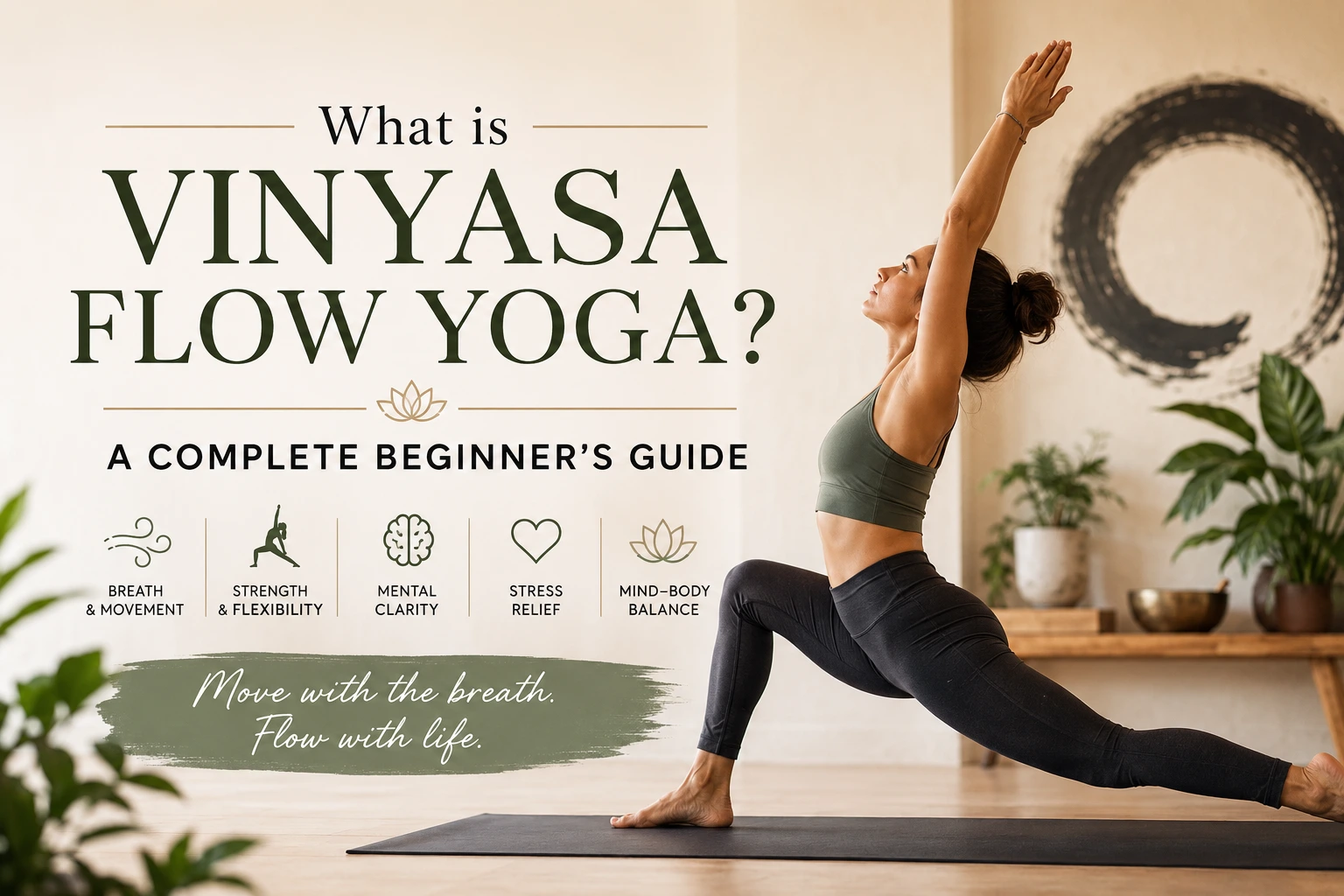

Vinyasa Yoga is basically breath and movement tied together. You don’t really sit in poses for too long here. You move. You breathe in; something opens up. You breathe out, and you shift into the next shape. It ends up feeling less like a sequence of postures and more like a continuous flow you kind of ride through. That’s also why people often just call it ‘Flow Yoga.’
The word “vinyasa” itself gets used in more than one way, which throws a lot of beginners off. Sometimes it’s talking about the whole style of yoga. Other times, a teacher might just mean the transition part; that familiar sequence: Plank, then Chaturanga Dandasana, into Upward Facing Dog, and finally Downward Facing Dog. And then there are moments where it simply refers to breath-linked movement patterns like Sun Salutations. Same word, slightly different uses depending on context.
If that has been confusing you for a while, you’ve landed at just the right place. This blog explains everything you need to know before you join your first vinyasa yoga flow class.
What Is Vinyasa (Flow Yoga)?
The word “Vinyasa” comes from Sanskrit and translates to “to place in a special way.” In practice, it simply means connecting a purposeful sequence of yoga poses with the breath to create a continuous flow of movement.
Every pose has a breath attached to it. Inhaling usually carries you into open and upward movements. Exhales take you down or into a twist. This intentional pairing creates a continuous flow (both physically and mentally) that Vinyasa is known for.
Vinyasa came out of Ashtanga Yoga. Ashtanga itself traces back to Sri Krishnamacharya in early 20th-century India. The difference is that Ashtanga follows a fixed sequence: the same poses, the same order, every single time. Vinyasa dropped that rigidity. The teacher builds the class, the vinyasa yoga sequences change, and no two classes are identical. Same foundation but different relationship with structure.
Benefits of Vinyasa Flow Yoga
Vinyasa flow yoga goes beyond toning your body and improving its flexibility. Since movement and breath are always running together, the practice ends up touching a lot of things at once (physically, mentally, hormonal, and neurological).
The benefits given below reveal how.
Heart health
When you engage in Vinyasa yoga practice, your blood pressure drops and your arteries stay healthier, which matters more than most people think.
Stress and anxiety
The breathing in vinyasa is there to calm or reset your nervous system. It helps lower cortisol and gives your body a kind of relief that most workouts don’t.
Full-body strength
Poses like plank, chaturanga, and warrior sequences work your whole body at once, not just one muscle at a time. That builds real, functional strength.
Flexibility and joint mobility
Your hips, hamstrings, spine, and shoulders get a full range of movement every single class. But not in an extreme way, just steady movement, which is exactly how the body becomes more flexible.
Lung capacity
Every move is tied to a breath. That kind of breathing practice strengthens your lungs and respiratory muscles in a way most other workouts skip entirely.
Focus and mental clarity
Tracking your breath, your movement, and your body all at once keeps your mind present. A lot of people find that sharper focus carries over into their everyday life, too.
Sleep quality
The calming effect of a vinyasa class doesn’t just disappear after you leave. Regular practitioners tend to fall asleep more easily and actually feel rested when they wake up.
Immune function
Your lymphatic system only moves when your body moves. Because vinyasa flow yoga works the whole body, it keeps that circulation active in a way that sitting still or doing isolated yoga exercises can’t.
Mood
The mix of movement, breathing, and staying present triggers the release of feel-good chemicals in the brain. You don’t walk out feeling weird; you just feel like yourself again.
Ultimately, these benefits are real, but they’re not instant. Your first class will show you what it’s like. Others will show you what it can do to your body. Show up consistently, and within a few weeks, the shift will start to happen.
What to Expect From Vinyasa Yoga
Your first class will likely start slowly. Some breathwork. Some light movement. Nothing that throws you in the deep end. You get a feel for your breath first, and then the pace gradually builds into a sequence of poses that flow into one another continuously.
Vinyasa doesn’t ask you to hold anything for long. You keep moving the whole time, and that’s actually what warms you up. By the middle of class, you’ll feel it.
Because every teacher puts together their vinyasa yoga sequences differently, the classes never really repeat themselves. The breath-to-movement connection is always there, but everything else shifts. Most classes close with a cool-down and savasana. You come out feeling like you actually used your body, your head is clearer, and somehow it didn’t feel like a strict routine the whole way through.
Vinyasa Yoga Poses You Should Know
Vinyasa doesn’t stick to a fixed sequence. But in your first few classes, certain vinyasa flow yoga poses will show up in almost every class. Getting familiar with different types of yoga poses in vinyasa yoga before you start will make the flow feel a lot less overwhelming.
Downward-Facing Dog
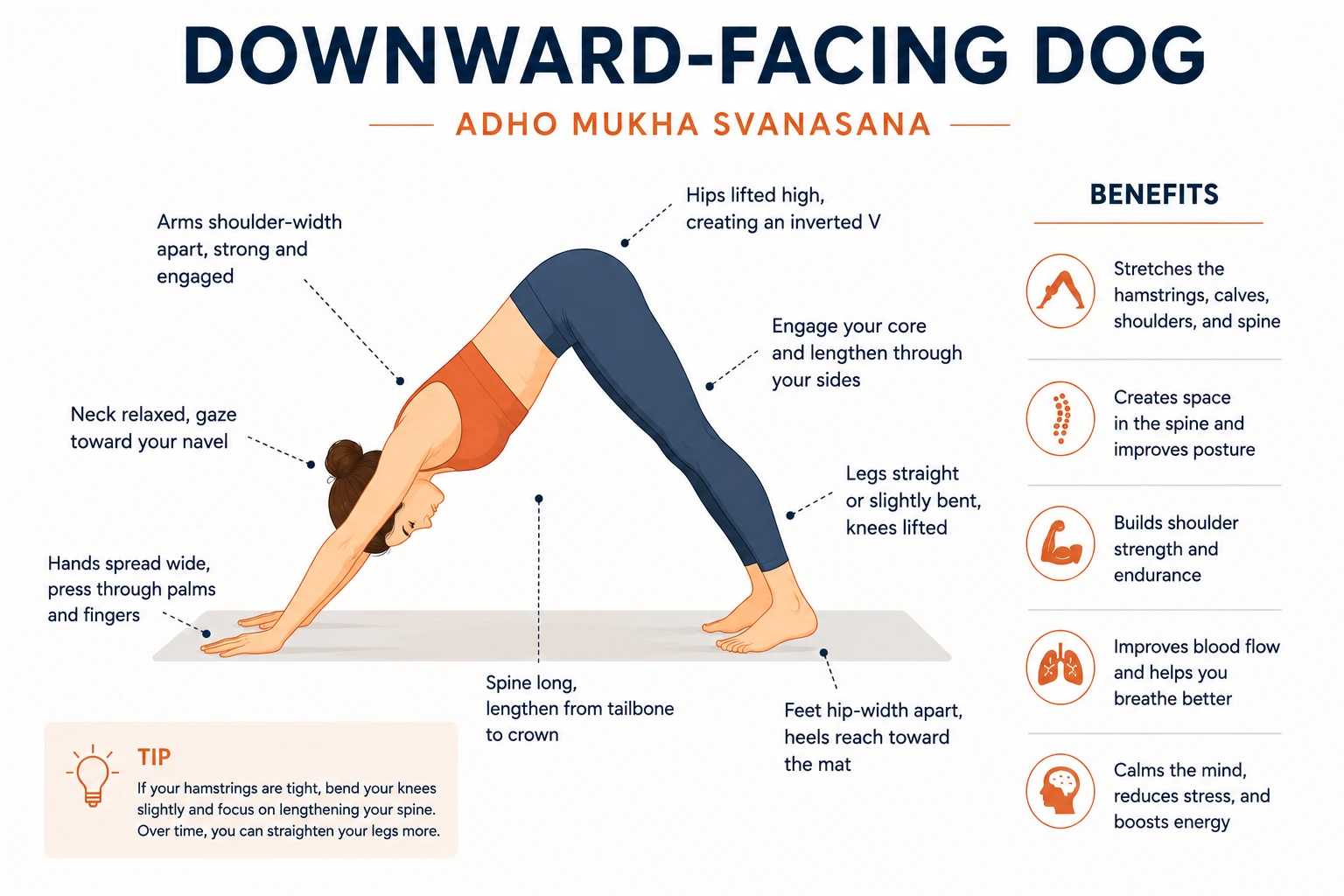
t’s the most common pose you’ll try. It stretches the hamstrings, gives the spine some room to breathe, and builds shoulder endurance without making a big deal of it.
Four-Limbed Staff Pose
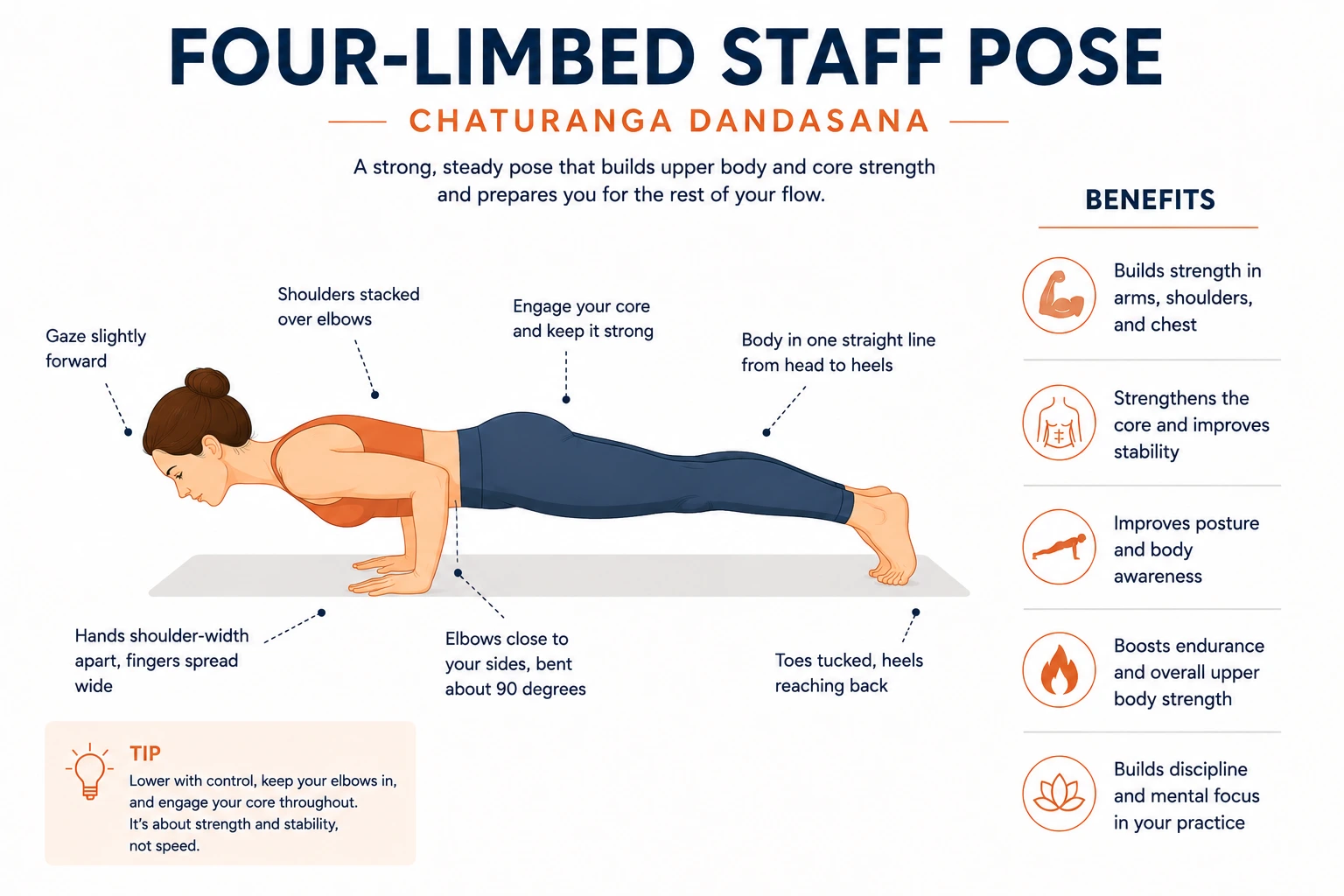
It’s like a push-up but in yoga. It sits right in the middle of the standard vinyasa yoga flow and does a lot of work on the arms and core over time.
Warrior I, II, and III
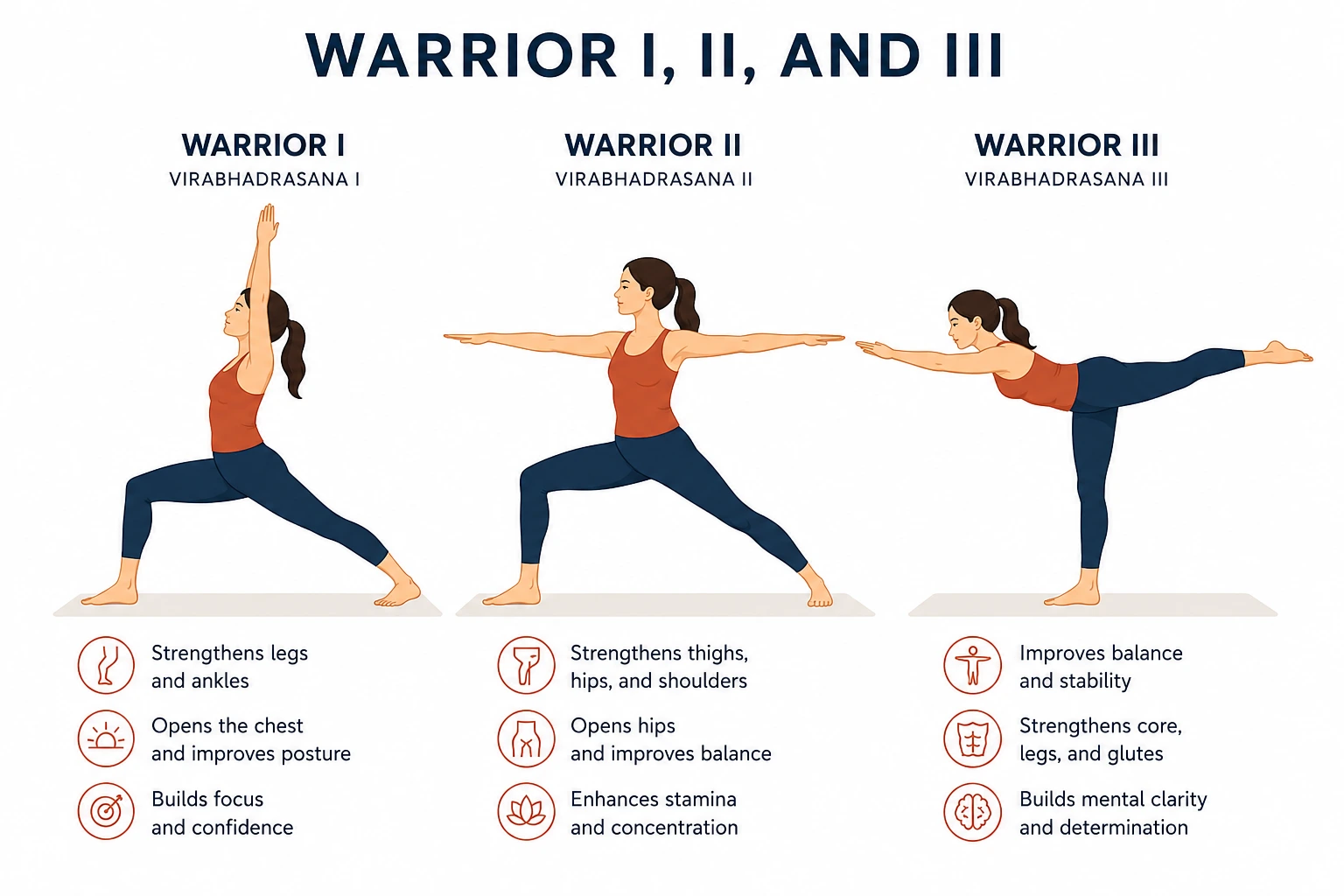
Each warrior form asks something different, but together, they do a lot more than one would imagine. They build lower- body power and mental determination.
Chair Pose
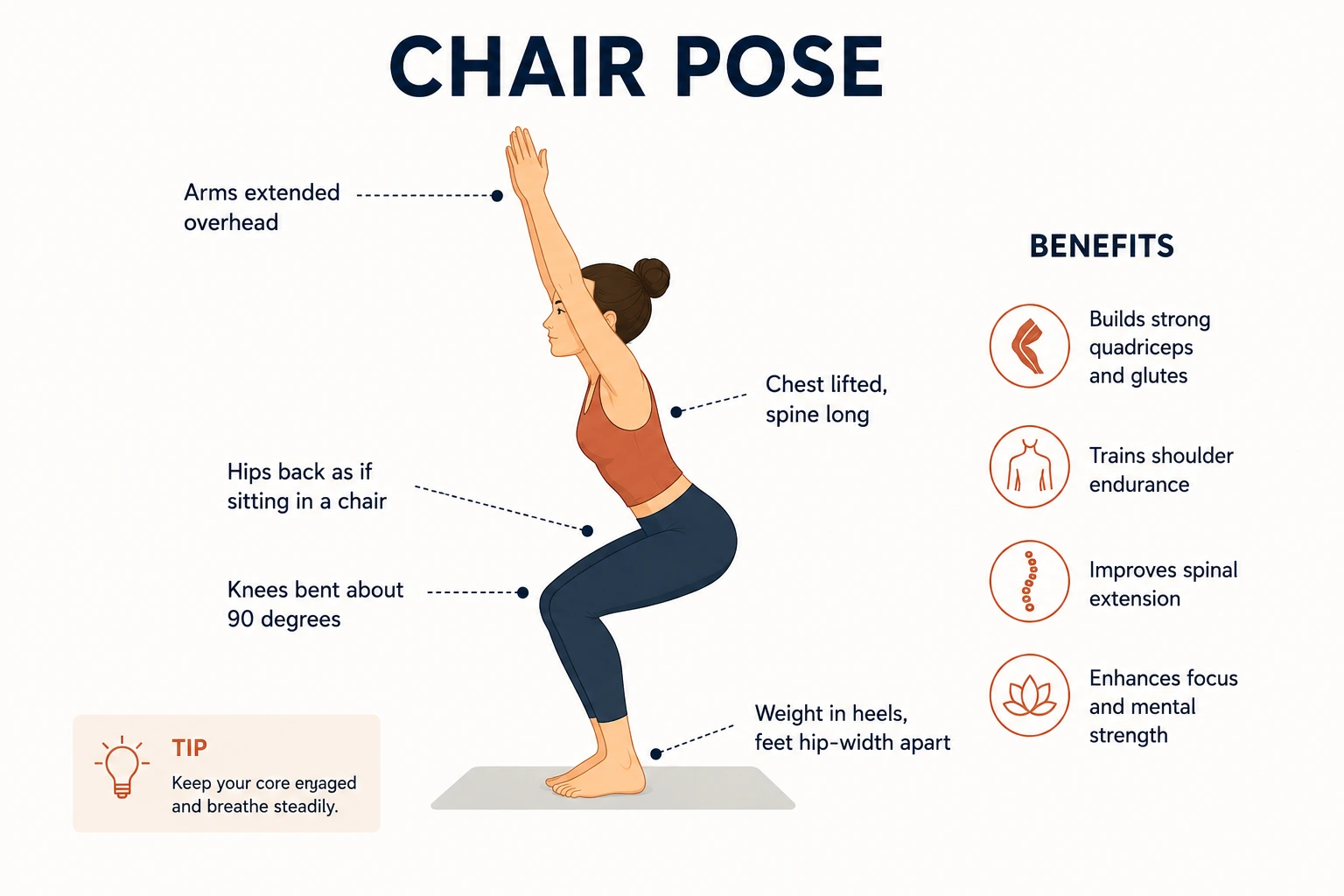
It’s actually harder than the name suggests. This pose helps you build strong quadriceps and glutes. Simultaneously, it trains your shoulder endurance and spinal extension.
Triangle Pose
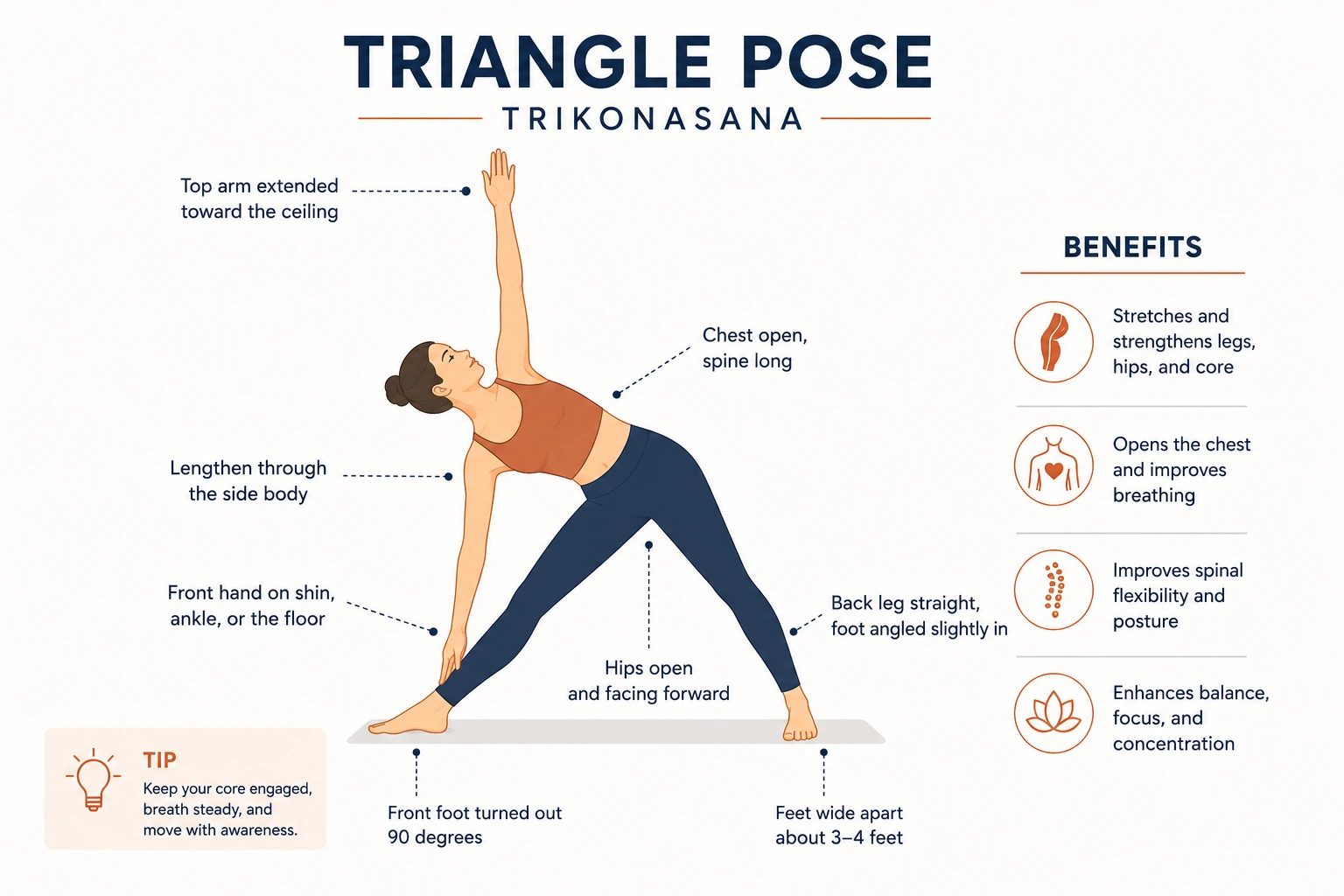
A long stretch through the whole side of the body, hamstrings, inner thighs, spine, chest, all getting attention at once.
Crow Pose
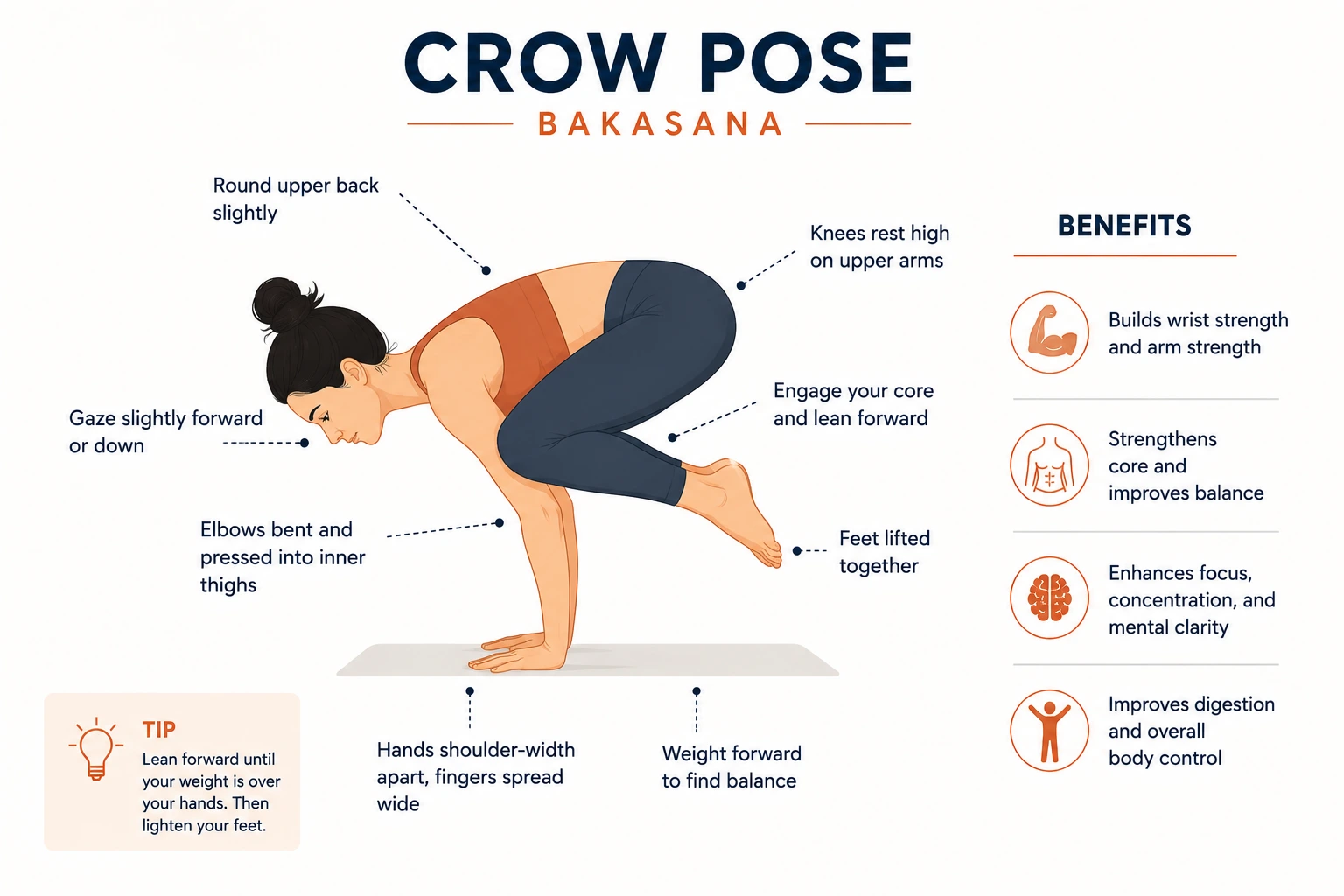
The wrist strength and core work are real. But leaning forward far enough to actually balance is where most people get stuck.
Pigeon Pose
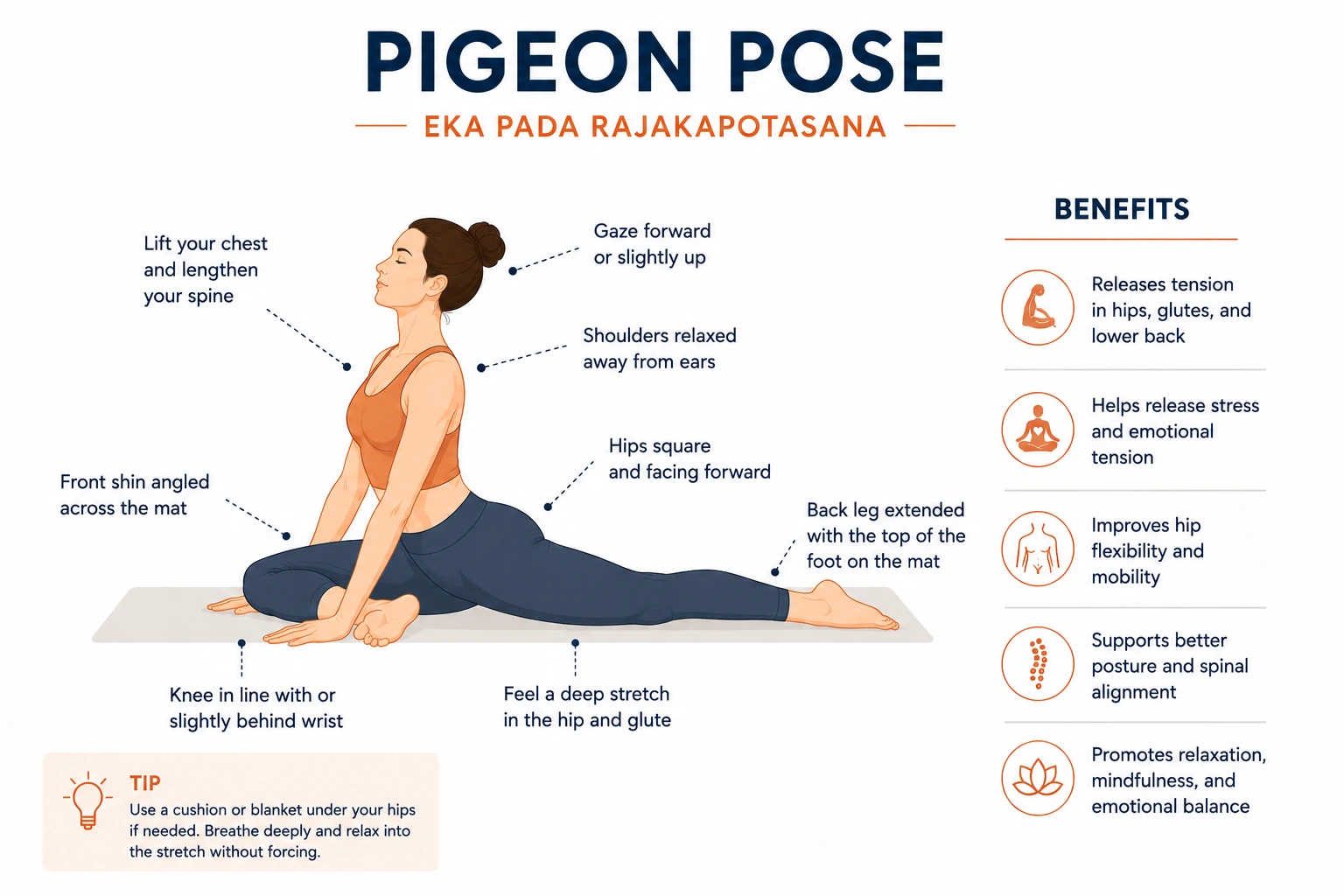
This pose helps a lot with releasing tension stored from prolonged sitting, stress, and emotional holding.
These poses won’t all come easily at first, and honestly, they’re not supposed to. Vinyasa is a practice in the real sense of the word. You show up. You work through it. And somewhere along the way, the poses that once felt impossible start to feel familiar. That’s really the whole point of it.
Is Vinyasa Flow Yoga Right for You?
Vinyasa is a good fit if you want a practice that challenges you physically without locking you into a fixed routine.
It works well for people who have some basic fitness, are comfortable with continuous movement, and want something that trains both the body and the mind.
Complete beginners can join too, but starting with a teacher who gives clear cues and offers modifications makes a real difference early on. If you are recovering from an injury, dealing with joint issues, or are in your first trimester of pregnancy, check with your doctor first and let your teacher know before class starts.
How to Start Your Journey!
The first move is always difficult and confusing. But when you have the right guide, it doesn’t have to be.
Insumataq Studio exists to solve your problem. We have a space where movement, breath, and stillness work together at the level where real changes happen (in body, mind, and nervous system).
Vinyasa flow(Simply Flow Yoga) is part of our regular schedule, alongside breathwork, somatic movement, Pilates, and sound healing. Every class is kept small on purpose, so you are never just a face in a crowd. You get real attention, real adjustments, and a practice that actually fits where you are right now.
If you are in Auburn and you have been putting this off, the schedule is waiting for you on our website. Pick a yoga class and show up. That is the whole first step. Book your spot at Insumataq Studio today.