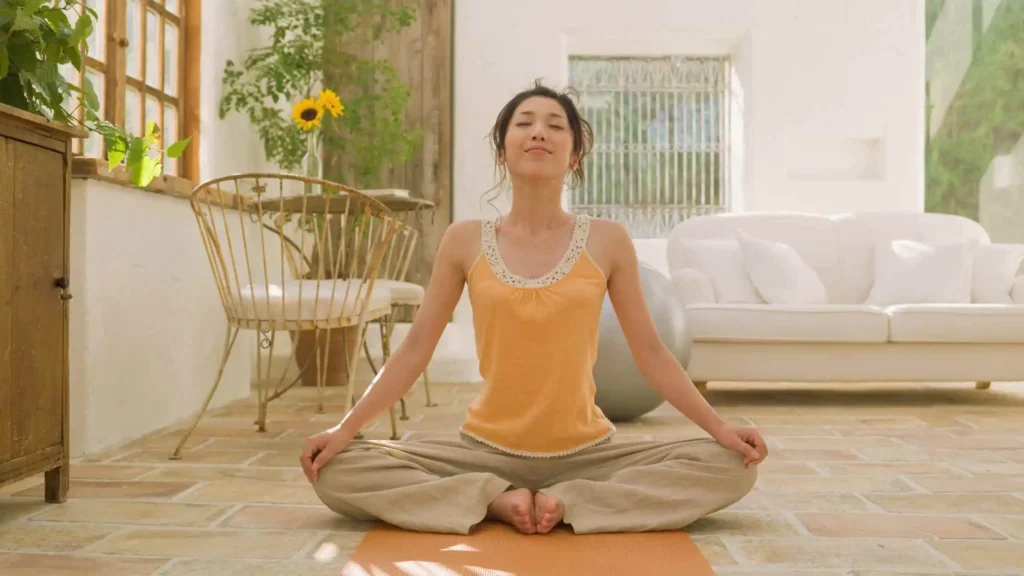
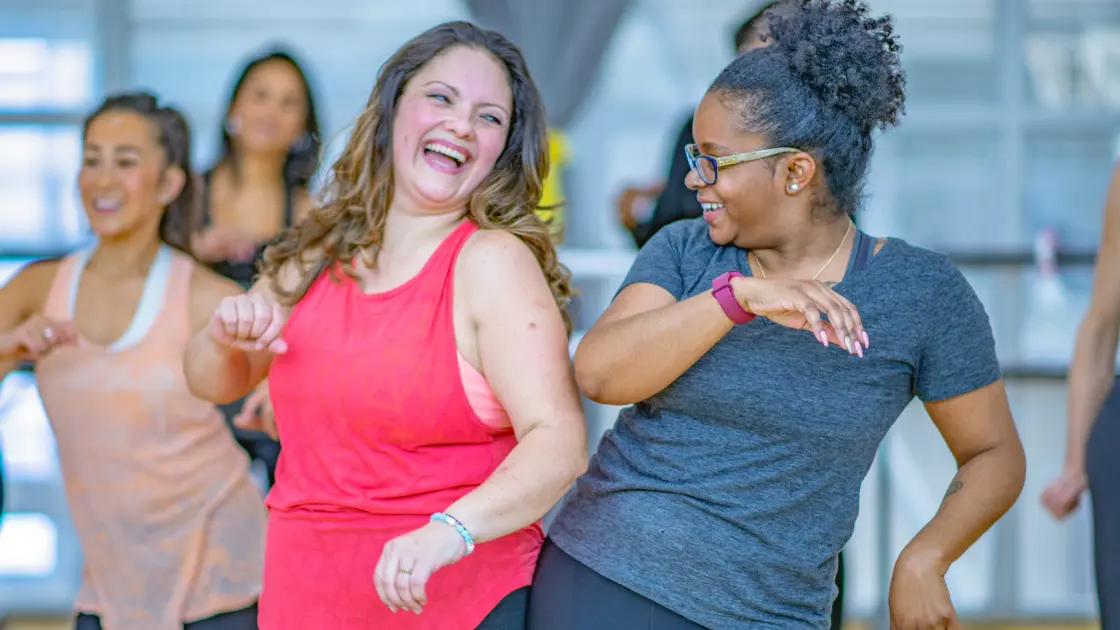

You walk inside a dance class and there’s no one telling you what to do next, no pressure to perform a certain way. You can just dance and be yourself with no steps to learn, no instruction checking on you again and again, and no wrong way to move.
If you ever dreamed of dancing without being judged, where that same action could provide you with a chance to express yourself, relieve stress, and improve the connection between your mind and body, ecstatic dance could be exactly what you’re looking for. For most adults learning about ecstatic dance for the first time, this could be quite unbelievable. It demands no perfection, no rhythm to match, and no choreography to memorize, but in return, it still has a lot to give back to a person.
This blog breaks down what exactly ecstatic dance is, how it connects to somatic awareness and the nervous system, what a real session looks like, and what to expect walking into your first class.
Table of Contents
What Is Ecstatic Dance?
Ecstatic dance simply means dance that often leads to a feeling of ecstasy. It’s a freeform movement practice with no set steps, no choreography, and no instructor guiding the room. It has been practiced for centuries, often for spiritual and shamanic purposes.
The practice traces back to shamanic traditions that used rhythmic movement and drumming to shift consciousness, and it was revived in the 1970s by Gabrielle Roth through her 5Rhythms method, which shaped much of how ecstatic dance (or conscious dance) is practiced today.
Some studios use the term “conscious dance” instead. However, the two largely describe the same thing: movement led by the body rather than a routine, helping the nervous system ease into expression and come out on the other side feeling grounded.
How Free Movement Affects the Nervous System
A 2025 review published in Psychology of Sport & Exercise found that dance and movement reduce anxiety, salivary cortisol, heart rate, and blood pressure, all measurable markers of stress in the body. That means dance is doing something specific to the nervous system’s stress response – not just distracting from it.
Here’s how free movement affects the nervous system.
Supports Stress Regulation
Free movement helps lower cortisol and activates the parasympathetic nervous system, shifting the body out of “fight-or-flight” mode. Rhythmic, repetitive movement calms nervous system arousal. This is why unstructured movement is often used as a stress-management tool.
Engages the Senses
It uses the body’s sense of position and balance, keeping the brain busy processing signals from muscles, joints, and the inner ear. This constant feedback helps improve coordination and body awareness. It also keeps attention focused on the present moment.
Promotes Self Expression
Movement not tied to fixed choreography allows emotion and intention to be expressed physically, in individual ways. This is linked to improved emotional processing in dance/movement therapy research. It gives the nervous system a non-verbal outlet that doesn’t rely on language.
Triggers Happy Hormones
Free movement increases endorphin release and often raises dopamine and serotonin too. This combination is tied to improved mood and reduced anxiety. The effect is well-documented for aerobic and rhythmic movement specifically.
Is Ecstatic Dance the Same as Somatic Dance? The Key Differences
Ecstatic dance and somatic dance are both forms of free, unstructured movements. But they serve different purposes and draw on different traditions which is why they may be initially confusing to some beginners.
Here’s what differentiates the two.
| Ecstatic Dance | Somatic Dance | |
|---|---|---|
| Definition | Free-form, music-driven movement without set steps | Mindful movement focused on sensing how it feels from within |
| Core Focus | Emotional release and energy expression | Body awareness and internal sensation |
| Movement Style | Free-flowing, often continuous and music-driven | Slow, gentle, mindful movement |
| Nervous System Effect | Activates and releases built-up energy/emotion | Calms and regulates through slow sensory attention |
Ultimately, somatic and ecstatic dance are just the two sides of the same coin – both built on the idea that the body holds what the mind can’t always process and helps release it.
Somatic movement works with that inward and slowly, helping the body process what it’s been carrying. Ecstatic dance lets that same release happen outward, through rhythm, music, and full expression. Different paths, same destination.
How Free Movement Can Develop Somatic Awareness
Somatic awareness means being able to notice what’s happening inside your body. It’s about paying attention to physical sensations, tightness, heavy breath, posture, or any shifts in energy, and treating them as information – not something to ignore or push through.
Free movement builds this skill in a way stillness alone often can’t, because motion forces sensation to the surface. A held breath becomes obvious the moment your body tries to move through it. A tight hip becomes impossible to ignore once you’re actually asking it to bend. Both ecstatic dance and somatic dance therapy can help build this awareness, though they approach it differently. Somatic dance works directly on this skill through slow, mindful movement.
Ecstatic/conscious dance opens the door to body awareness once the initial release of energy settles, as movers often become more attuned to their body’s signals during the practice. The somatic approach behind both practices treats the body as a source of insight rather than something to control or perform with.
Key Benefits of Ecstatic Dancing
Beyond what it does for the nervous system, ecstatic dance offers a handful of benefits that show up in daily life – not just during a session.
- Emotional Clarity – Not every feeling needs to be analyzed to be understood. Sometimes the fastest way through frustration, sadness, or restlessness is to move it out of the body instead of thinking it through.
- Stronger Body Awareness – Regularly moving without judgment teaches you to trust what your body is telling you – tension, fatigue, energy. That trust builds a stronger connection between body and mind that carries well past the dance floor.
- A Boost in Creativity – Letting go of rules in one area of life has a way of loosening them elsewhere too. Many people find that ideas and insight show up more easily once movement has cleared some of the mental noise.
- A Real Sense of Community – There’s something genuinely grounding about being in a room full of people all moving their own way, without needing to talk or explain anything. It builds connections without a single word being exchanged.
Together, these benefits are part of why ecstatic dancing keeps showing up as more than a passing wellness trend, it addresses something people are actively missing: a way to process, connect, and create without needing language to do it.
Conclusion
In the end, ecstatic dance works because it skips the part most stress-relief practices get stuck on, explaining a feeling before you’re allowed to deal with it. Move first, understand later, or don’t need to understand it at all. That’s the actual value here: a way to process stress, emotion, and tension that doesn’t require you to talk about any of it first.
None of that happens by reading about it. The mechanics, the nervous system science, the somatic connection – all of it explains why the practice works, but the actual release only happens once you’re moving.
If you’re in or around Auburn, CA, Insumataq Studio provides Ecstatic Dance sessions for anyone ready to move through stress and emotion the way this practice is built for. Visit our Wellness Events in Auburn and Activities page to see upcoming session dates and reserve your spot.
Frequently Asked Questions (FAQs)
No. It supports emotional release and body awareness, but it works alongside therapy, not as a substitute.
Either, depending on what you need. One leans outward and expressive, the other inward and slower. Many people benefit from both.
It builds over time with repetition and eventually carries into daily life, not just during a session.
Yes, that's normal. Movement gives suppressed tension somewhere to go, which can surface feelings you weren't consciously aware of.
There's no fixed schedule. Some people notice a shift after one session, but deeper effects build with regular practice over time.