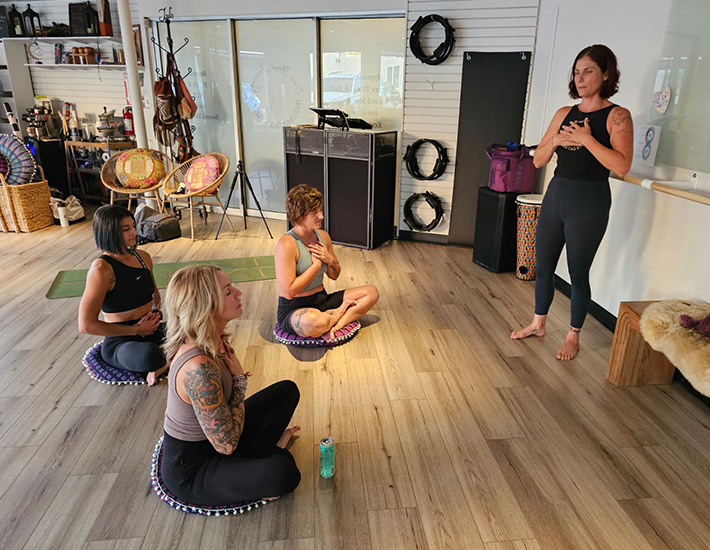
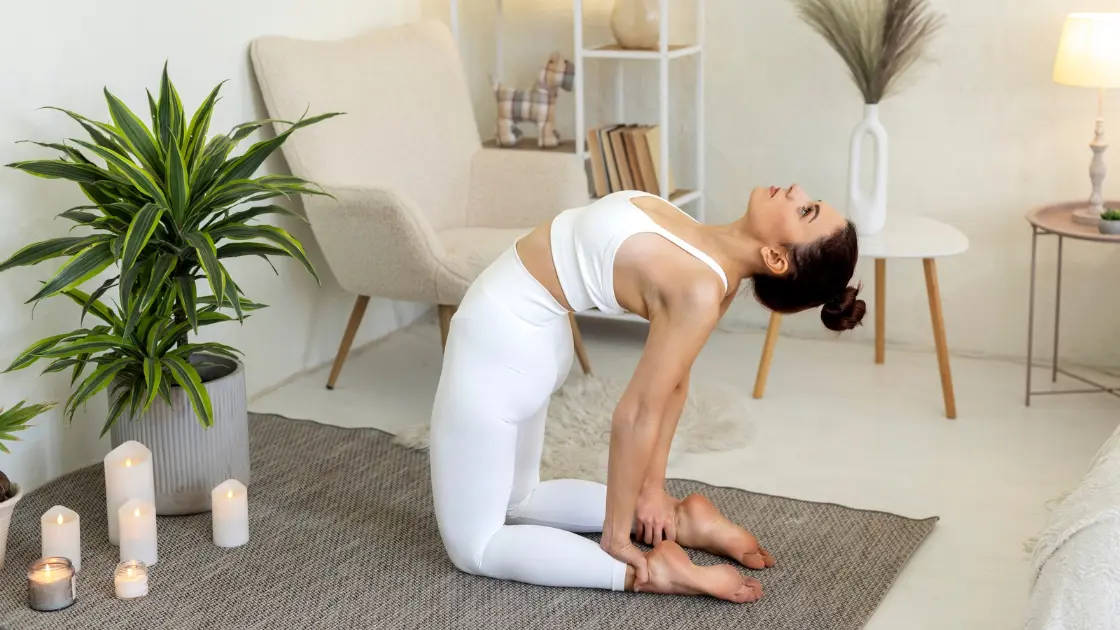

Stress manifests itself physically through tightness in the shoulders, tension in the neck, or tightness in the back. Slow movement, body awareness, and gentle somatic yoga aid in releasing the physical manifestations of stress and relaxing the body without having to stretch too deeply or maintain challenging postures.
Movements like spinal twists, cat-cow, shoulder rolls, window wipe knees, neck rolls, swaying, and shaking will allow you to become more aware of the areas where your body is tense and gradually allow you to release them. These seven exercises are simple to practice on a daily basis, particularly when you feel the need to relax for a moment.
Can Gentle Somatic Yoga Actually Support Relaxation & Stress Relief
Yes, gentle somatic yoga can contribute to relaxation and stress management. Slow and mindful exercises will provide you with an opportunity to feel the tension in your muscles and relieve it without any additional effort from your body.
Moreover, scientific research supports the benefits of gentle yoga for relaxation. According to a 2024 systematic review and meta-analysis, yoga practice may contribute to stress relief in a population of 1,026 participants, but the quality of evidence is low.
Therefore, gentle somatic yoga practice can become an efficient solution for everyone who wants to relax and pay attention to their body. But it should be noted that there is not enough scientific research on the somatic movements.
7 Gentle Somatic Yoga Exercises for Stress Relief
Each of the following seven poses of gentle yoga for relaxation focuses on a specific part of the body or a certain kind of movement. You may choose to do each one separately or to create a brief exercise sequence out of them.
1. Spinal Twists
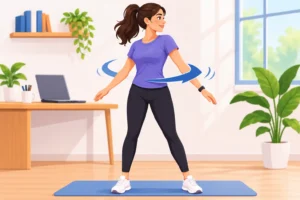
Spinal rotations are an easy way to relieve the stiffness in your back, shoulders, and hips after spending many hours sitting down. Rotating your body from side to side will help increase spinal flexibility and make you feel relaxed.
How to Do It?
- Stand with your legs slightly apart and allow your arms to hang loose.
- Rotate your body from side to side slowly.
- Repeat for 3–5 minutes.
2. Cat-Cow Stretch
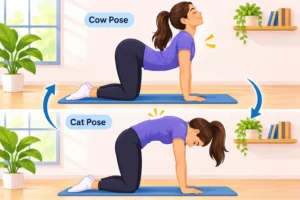
Cat-Cow involves gentle movements of the spine in two positions. This exercise helps loosen up the spine and increase its flexibility. Breathing in coordination with the movement also helps establish a rhythmic pattern and makes you feel relaxed.
How to Perform?
- Go down on all fours, placing your hands under your shoulders and your knees under your hips.
- Inhale and arch your back, lifting your head and tail bone up.
- Exhale and round your back, bringing your chin down towards your chest.
- Repeat for 1 to 5 minutes.
3. Shoulder Rolls
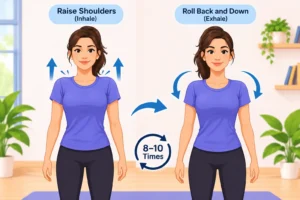
Stress may lead to tightening of shoulder muscles without even realizing. Shoulder rolls will stretch these muscles, decrease stiffness in the neck area, and promote good posture. This exercise is recommended for cases when shoulders get tight due to sitting at the desk.
How to Perform?
- Sit or stand in a comfortable position and let your arms hang loose.
- Inhale and raise your shoulders towards your ears.
- Exhale and roll your shoulders back and down.
- Repeat 8-10 times and then change the direction.
4. Window Wipe Knees
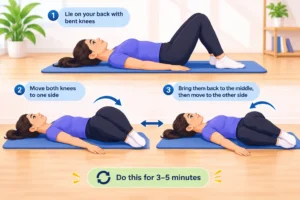
Tension in the hips and lower back makes it hard to be comfortable, particularly when you have had a long and stressful day. Window Wipe Knees is a yoga pose for the lower back where you move your knees side to side in order to release tension in these parts of the body. The gentle rocking movement might also help your body relax.
How to Do It?
- Lie down on your back with bent knees and your feet on the ground, spread slightly apart from your hips.
- Position your arms in a comfortable position by your sides.
- Exhale, and slowly move both knees to one side.
- Inhale and bring them back to the middle, then do it again in the other direction.
- Do this for 3–5 minutes without forcing yourself.
5. Neck Rolls
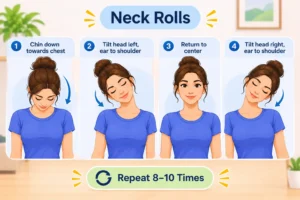
A stiff neck makes even the most basic movements unpleasant, particularly when you feel stressed and your neck muscles get tensed. Neck rolling is an exercise that will alleviate this tension, increase your flexibility, and make it easier for you to turn your head.
How to Do It?
- Find a comfortable position and slowly bring your chin down towards your chest.
- Then slowly tilt your head to the left, making your ear touch your shoulder.
- Bring back your chin to the neutral position and do the same thing to the other side.
- Repeat the procedure 8–10 times.
6. Swaying
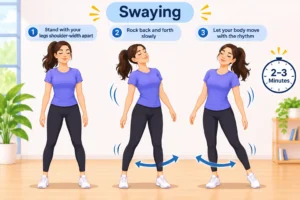
The gentle rocking motion may be soothing, similar to that of being rocked. The rhythm could help to calm down any restlessness and relax your body with the help of the rhythmic motion.
How to do it?
- Stand with your legs shoulder-width apart or sit straight.
- Release your arms and rock back and forth slowly.
- Observe how the weight of your body moves along with your motion.
- Do this exercise for 2-3 minutes.
7. Shake Out
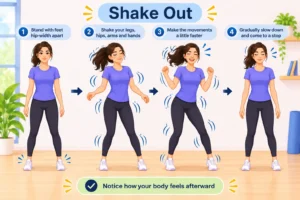
Sometimes when you are feeling restless and overwhelmed, sitting still won’t feel calming. Shaking your body is an active approach to releasing tension from your muscles and letting go of your physical restlessness. You can change the level of intensity when practicing somatic movement according to your own comfort level and slowly decrease, as you start to feel more calm.
How to Do It?
- Keep your feet about hip-width apart and let your arms hang loosely.
- Shake your legs, hips, arms, and hands without moving your head and neck.
- Make your movements a little faster if it feels good.
- Gradually slow down, then come to a stop.
- Notice how your body feels afterward.
Building a Simple Somatic Movement Routine
It is not necessary to incorporate all seven poses of gentle somatic yoga for emotional release into your routine immediately. You can start with two or three that feel comfortable and repeat them for 5-10 minutes daily. With time, you will get used to them and can experiment with others and tailor your routine according to your needs.
Moreover, you can expand your knowledge about body-focused exercises through other somatic practices. For instance, you can work on becoming more attentive to your breathing with somatic breathwork. Somatic dance therapy allows you to express yourself freely. You can find out more about the relation of physical sensations and emotions through the somatic therapy guide.
At Insumataq Studio in Auburn, CA, you can learn yoga, breathwork, and somatic movement with guidance from experienced instructors, helping you practice each technique correctly and develop a routine that suits your needs.
Ready to Explore Somatic Exercises for Stress Relief, Anxiety & Trauma Recovery?
If you’d like to explore somatic movement more deeply, Insumataq Studio offers somatic yoga classes and holistic wellness events in a supportive setting. You can also book a wellness class near Auburn, CA, to explore guided practices that support relaxation, body awareness, and emotional well-being.