

Many of us move through the day without even noticing how we feel in our bodies. We sit for long hours and avoid the chaos in our brains until it becomes “normal.” As time passes, that chaos shows up in different parts of our bodies. Sometimes it shows up as stiffness and fatigue, and other times as restlessness or anger.
We get so used to living in the state of disconnection that we forget what it feels like to move with ease. However, you can break this pattern with awareness. This awareness often becomes the medicine you’ve been searching for.
This is where somatic yoga helps you slow down and be more aware of how your body feels and moves. It helps relax your muscles and settle your nervous system, which naturally supports healing. How? Let’s uncover. This blog is all about what somatic yoga is and how it can help you heal from within.
What Exactly is Somatic Yoga?
Somatic yoga isn’t about getting a pose “just right.” It’s about noticing how your body moves, breathes, and responds to each moment. It’s very different from traditional yoga, where you’re often trying to bend farther or hold poses just because you’re “supposed” to.
In a somatic yoga class, your emphasis is on how each motion or breath is experienced. You move slowly, pause often, and observe what’s happening in your body at the moment. Though the poses are one small aspect that is common between the two. The real magic unfolds in the slow and mindful exploration (not in achieving the pose itself).
Your attention becomes the main practice. You pause more and notice instead of pushing yourself. You start to move with curiosity instead of trying to get it “right.” This gentle awareness helps your body let go of old tension. It helps you move more freely and find a sense of calm from the inside out.
How Somatic Yoga Differs from Traditional Yoga
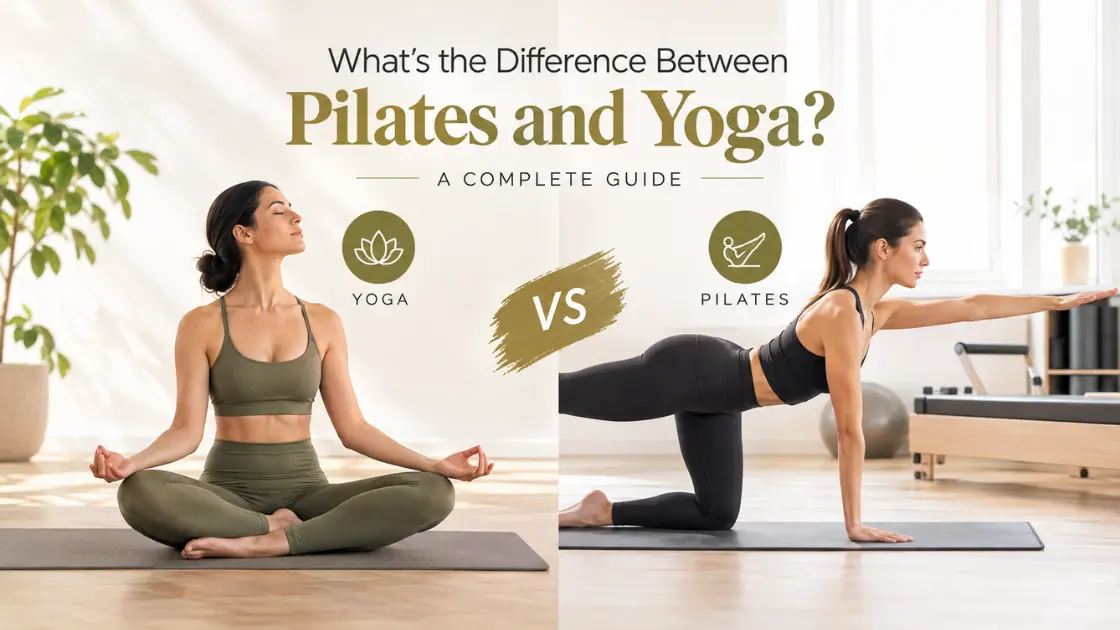
Traditional yoga often asks you to follow the shape: steady breathing, intentional posture, and guided flow. There’s a structure. There’s a clear direction from the instructor.
However, somatic yoga poses feel different from the moment you begin. It’s a practice that builds strength, discipline, as well as flexibility through repetition and alignment cues. There’s simply no rush to match a form or move. Instead, you explore movement in a way that teaches you how your body actually behaves and reacts. You repeat a tiny motion several times just to feel what changes inside your muscles and breath.
The focus isn’t on looking a certain way or hitting a target. It’s about reconnecting with your body, noticing what it’s doing, and learning how to move with ease. For many people, this approach becomes a way to relearn comfort, softness, and safety in movement.
Benefits of Somatic Yoga
You go beyond motions when you practice somatic yoga exercises. You tune in to your body and shift the dialogue inside you from “Do I look right?” to “How do I feel?”
Below are some meaningful ways this practice supports real-world healing and everyday well-being.
1. Helps retrain the nervous system
You teach your nervous system that it can retrain instead of forcing muscles to relax. Slow, intentional movement and sustained awareness gradually shift you out of “constant alert mode” and into a calmer baseline. That’s why somatic work is often recommended for people dealing with stress, burnout, or a body that always feels “switched on.”
2. Improves body literacy
You don’t just stretch. You learn. You start understanding your body’s signals:
- When discomfort is simply tightness
- When your body needs rest instead of pushing
- When tension is emotional, not physical
This internal feedback becomes a tool you carry into daily life: sitting, walking, working, and resting.
3. Reduces habitual pain and stiffness
Many pains come from unconscious holding: clenched jaw, lifted shoulders, tight hips from sitting, and bracing through the core. Somatic yoga exercises help identify these holding patterns and replace them with easeful, efficient movement. It’s not about flexibility; it’s about unlearning strain.
4. Builds movement confidence
Instead of “Am I doing this correctly?” the question becomes, “What feels supportive right now?” That shift matters. It helps you trust your body’s intuition again, especially if you’ve been hurt, tired, or felt like you weren’t moving.
5. Creates space for emotional processing
When the body relaxes, emotions that were stored frequently do too. Somatic awareness exercises make space for silence, the kind where feelings can come and go without being pushed. It’s not obvious, but that gentle unwinding can help you deal with stress in your daily life.
How to Get Started: A Beginner’s Roadmap
1. Choose a space
You don’t need a fancy studio or equipment. Find a quiet spot in your house. A plain floor, a soft blanket, or a yoga mat will all work. The key is to feel safe, comfortable, and free from distraction. Turn off notifications, bring a cushion or two if needed, and give yourself a few minutes before you start to settle into stillness. You may also join somatic yoga classes near your location for a guided session.
2. Set an intention
Instead of focusing on “I’m going to master this pose,” try “I’m going to listen to my body today.” That small shift matters. The invitation is to explore with curiosity, not to check boxes. Your intention could be something like “I want to feel more ease in my body” or “I’m ready to notice how tension comes up and gently release it.”
3. Begin with very gentle movement
Start with 5–10 minutes. Lying down, seated, or standing, let your body guide you. For example:
- Breathe deeply in and out. Notice where in your body the breath moves.
- Slowly rock your pelvis or roll your spine (very gently), and observe what feels good and what feels restricted.
- Pause often. Check in: What changed when I slowed down? Where do I feel softer? Where do I feel alert?
4. Use your breath as your anchor
With each inhale, feel space. With each exhale, feel a little release. If your mind drifts to to-do lists or worries, gently bring it back to the sensation of your breath, your body, and your presence. Over time, your breath becomes your guide.
5. Listen for subtle signals in the body
You might feel warmth, tingling, or softness, or see parts of your body relax. You might feel a tight band or a stiff joint. Don’t judge it. Just notice. That noticing itself begins the release. Ask yourself, “What does this part of me need right now?” Then consider what small movement helps.
6. Expand slowly and steadily
As you begin to feel more comfortable, extend your time to 15–20 minutes, or add another short session later in the day. Choose a class, video, or teacher who emphasizes a somatic, felt-sense approach rather than intense flows or lots of transitions. A trauma-informed or body-aware instructor is a good choice if you’ve had injuries or high stress.
7. Reflect and integrate
Before you head back to emails, errands, or the rest of your routine, pause for a breath or two. Stand or sit. Observe if anything feels lighter, warmer, or less tense than when you started. These small check-ins help your body remember the experience instead of rushing past it.
8. Make it part of your lifestyle
This practice isn’t just “a workout.” It’s an ongoing conversation with your body. You might add 2–3 short somatic yoga class sessions a week or begin each day with a 5-minute scan of tension. Remember: progress isn’t about greater flexibility or more extreme poses. In fact, it’s about increasing comfort, awareness, and ease.
Somatic Yoga Moves & Poses You Can Try
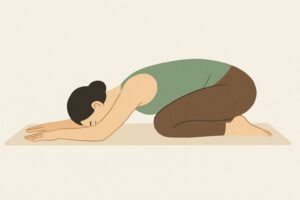
1. Somatic Child’s Pose with Breath Ripples
- Come into Child’s Pose, knees apart or together, whatever feels natural.
- Rest forehead on hands or block.
- Instead of staying still, gently pulse your breath into your belly, ribs, and lower back.
- Feel how the breath subtly expands your back and softens your belly.
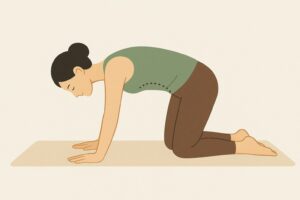
2. Somatic Cat-Cow With Micro-Waves
- Tabletop position.
- Instead of deep arches, move 10–20% of the range.
- Imagine your spine undulating, not moving in a big arc.
- Pause often. Feel where movement is smooth vs. stiff.
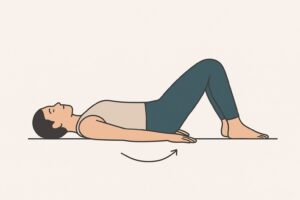
3. Reclined Pelvic Tilt and Slow Release
- Lie on your back, knees bent, feet flat.
- Gently tilt pelvis to arch lower back (inhale).
- Tilt pelvis to flatten lower back (exhale).
- Move slower than your habit, almost like you’re teaching your spine to trust movement again.
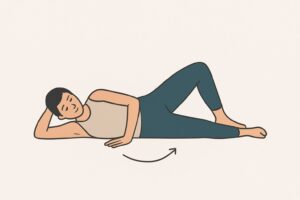
4. Side-Lying Somatic Knee Sweep
- Lie on your side, knees bent.
- Slowly slide your top knee forward and back.
- Feel how your hip, waist, ribs, and shoulder respond.
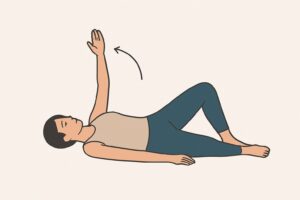
5. Supine Arm-Float and Shoulder Melt
- Lie on your back.
- Slowly lift one arm toward the ceiling, only halfway.
- Pause, notice effort.
- Release the arm down even more slowly.
Conclusion
Now, you must be seeking something far more than just another workout. You might be looking to feel more at home in your body, to move with greater ease, and to find calm in your daily life. That’s exactly what somatic yoga exercises offer. It’s for anyone who:
- feels drained or disconnected from their body
- carries tension, stiffness, or chronic tightness
- does a lot of sitting, feels stress in their nervous system, or wants movement that doesn’t feel forceful
- wants a gentle path to healing (physical, emotional, or both)
You don’t need to be flexible, athletic, or already “good at yoga” to benefit from this type of yoga. This is because it invites you in exactly as you are. Over time, with regular practice, you’ll likely find your body opening, your breath deepening, your nervous system settling, and a new sense of ease emerging in your everyday life.
At Insumataq Studio, we see movement as more than just exercise. It’s a form of self-care. Somatic yoga, in particular, is like a gentle conversation between your body and your awareness. This practice helps you tune in, notice, and respond with awareness.
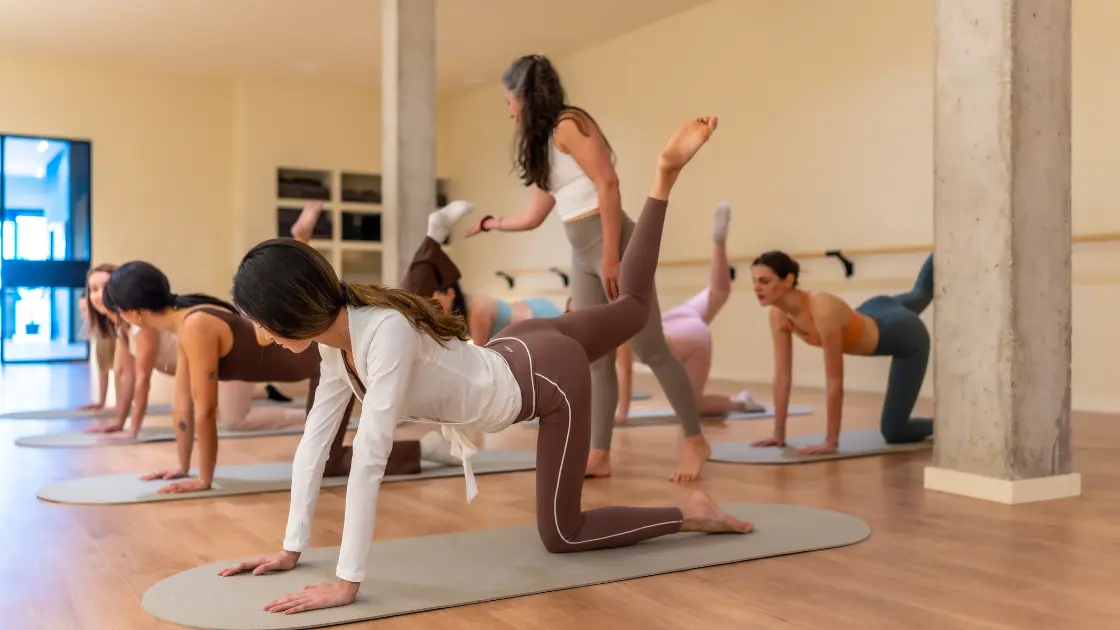
Our somatic yoga classes (available in Auburn, Roseville, Rocklin, Granite Bay, and Loomis) are designed to help you slow down, release tension, and reconnect with yourself, without pushing or striving. Our instructor will be there with you every step of the way. They’ll support you as you move toward ease, clarity, as well as connection.
We’d love for you to join our community and experience the simple, profound joy of moving with awareness.