
Unlike traditional talk therapy, brainspotting is a powerful brain-based method used by therapists nowadays. Stress and tension have different ways of building up in bodies, sometimes in the muscles and at other times in nervous system patterns. This is where the new-age therapeutic approach comes in to help.
Brainspotting uses eye positioning to access the pent-up trauma and suppressed memories as well as feelings associated with traumatic events. The stored tension triggers physical sensations and even creates patterns of emotional reactivity that become difficult to release through conscious effort alone. This is when you need support beyond traditional talk therapy. You need brainspotting therapy. If you’re new to this subject, don’t worry! We’ll help you uncover what brainspotting therapy is and how it can help you.
What Exactly is Brainspotting Therapy?
Among a variety of trauma-treating options, brainspotting only recently gained attention due to its distinctive approach of targeting unresolved trauma through eye positions and bodily responses. Therapists identify brainspots (specific eye positions) that connect to deep parts of the brain where trauma is stored. It is a kind of brainspotting somatic therapy that involves bodily sensations to help process psychological trauma.
Brainspotting was discovered by David Grand (Psychologist and Researcher) in 2003 while working with eye movement desensitization and reprocessing (EMDR) therapy. EMDR is a mental health treatment technique that involves side-to-side eye movements with talk therapy. It’s used to change emotions, thoughts or behaviors that result from a distressing experience (trauma). However, the primary difference between brainspotting and EMDR is the minimal amount of talk involved.
How Brainspotting Therapy Works?
Brainspotting is grounded in the idea that emotions related to trauma can become trapped within the body and lead to mental as well as physical issues. It works by using the visual field to identify “brainspots,” meaning eye positions connected to stored trauma or emotional distress.
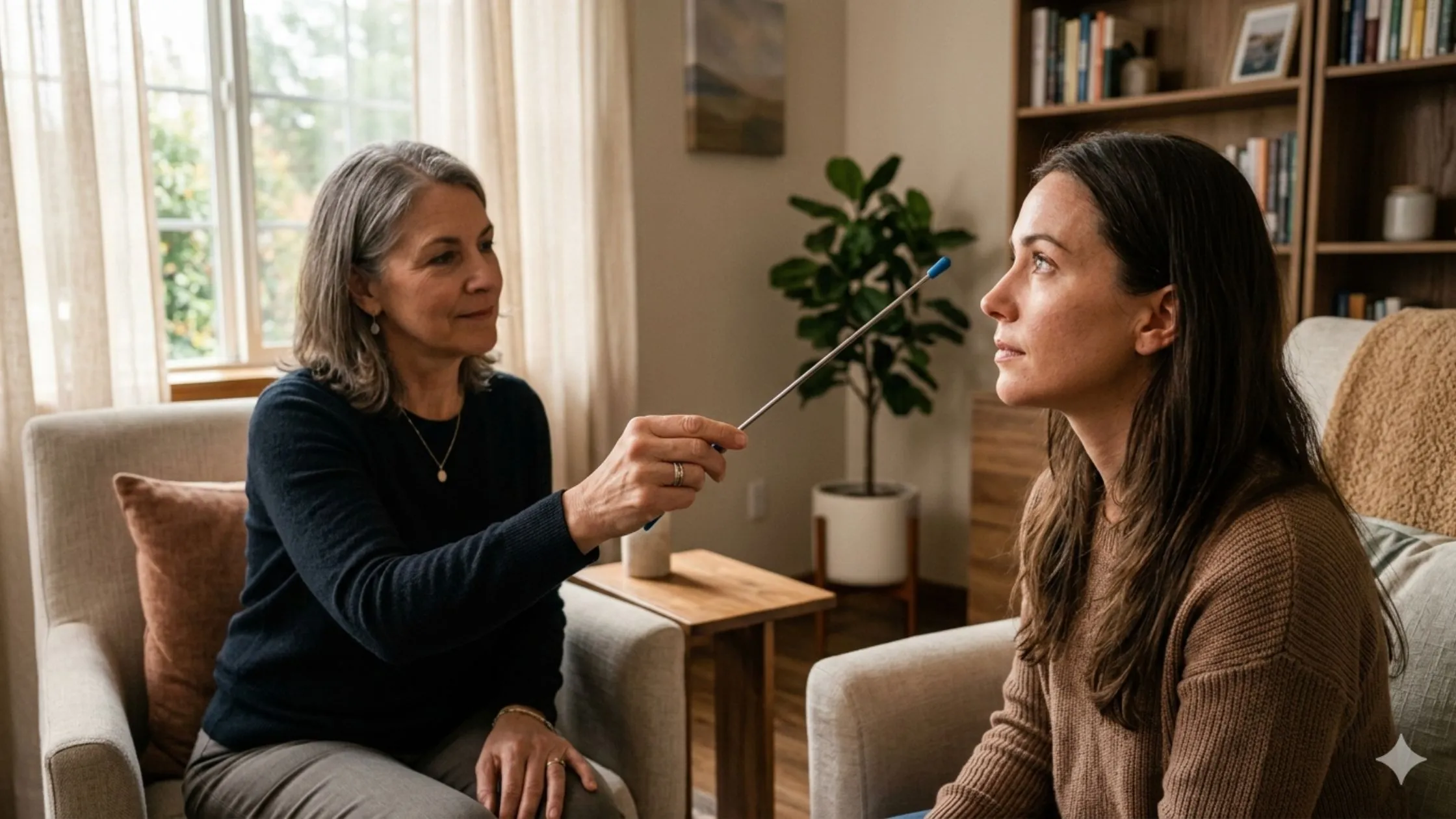
During brainspotting, you move your eyes slowly, following a therapist’s pointer to find a particular spot in your vision called a brainspot. While concentrating on a particular point, you become more aware of a bodily sensation or emotion. The brain then begins to process the experience on its own. This subtle yet impactful technique supports the release of stored emotions and promotes nervous system regulation.
What Happens During a Brainspotting Session?
Not every brainspotting session is designed in the same way.
Therapists use a tool (usually a small pointer) to help identify the most activated or grounded eye position. They guide you to notice where your gaze naturally falls when focusing on certain emotions or memories. Some therapists also integrate other therapeutic methods (such as somatic therapy or EMDR) to deepen the healing experience.
They use different ‘frames’ of brainspotting that allow you to heal at your own pace and in a way that feels comfortable, such as-
- Activation spots for fast processing
- Grounded spots for slow and gentle processing
- Neutral spots for stability
After the session, people usually report feeling a sense of release, both mentally and physically. But some may feel a little emotionally drained or more sensitive than usual, which is completely normal. In fact, different emotions may continue to arise in the following days. However, this therapy helps in many different ways eventually and is effective for
- Unprocessed trauma and stress-related symptoms
- Persistent anxiety or sudden panic episodes
- Low mood or emotional heaviness
- Chronic overwhelm and exhaustion
- OCD and intrusive thoughts
- Emotional regulation and nervous system healing
Brainspotting is particularly effective for individuals who feel overwhelmed or blocked when discussing their trauma, as it facilitates deep and non-verbal processing.
How Brainspotting Can Help You!
A 2017 pilot study conducted by Dr. Grand revealed that participants experienced a noticeable decrease in PTSD symptoms after undergoing three one-hour brainspotting sessions. Another study published in 2022 showed that single sessions of EMDR, body scan meditation, and brainspotting each helped individuals work through distressing memories. The results indicated that brainspotting can be just as effective as other well-established mind-body therapeutic methods.
The existing evidence suggests that this alternative therapy can be extremely helpful if you’re dealing with:
- Anxiety
- Depression
- PTSD
- Chronic pain
- Sleep difficulties
- Creative blocks
However, some people do feel uncomfortable sometimes, especially when traumatic experiences are being processed. Others report reduced stress levels, less overthinking, improved emotional regulation, and more!
Here are some common benefits that an individual can experience.
1. Release Stored Stress
Brainspotting is different from techniques that manage symptoms. It works with the subcortical brain, which is associated with trauma, fear, and ingrained emotional patterns.
Know More: How to Release Stored Trauma From Your Body
2. Reduces Overthinking
Brainspotting reduces the pace of your racing thoughts that hit especially before bed. It reduces the mental chatter and rewires your brain to process stress more effectively.
3. Regulates Nervous System
Your body struggles to relax when your nervous system remains trapped in a constant “fight or flight” mode. Brainspotting interacts with the body’s natural nervous system functions to encourage a shift toward relaxation and recovery.
4. Improve Emotional Resilience
Brainspotting helps you become stronger emotionally by addressing old emotional patterns and wounds. This makes future stress less likely to disrupt your equilibrium or interfere with your sleep.
5. Relief Without Medication
Who doesn’t love a drug-free way to address anxiety, stress, or trauma? Brainspotting helps the brain process and heal naturally, so you can recover without relying on drugs.
How to Start Your Brainspotting Therapy Journey?
At Insumataq Studio, we help you assess, process, and heal emotional childhood traumas. Our approach to Brainspotting for depression, anxiety, stress, or childhood trauma is unique yet deeply personalized to suit individuals’ unique needs.
It’s not a forced discussion or analysis. It’s a process that’ll let your brain naturally recognize how it responds to stress and trauma. To learn more about our brainspotting therapy, contact us, and we’ll guide you through the whole process, plan, and execution. Reach out to us at Jenn@insumataq.org.
Conclusion
The journey to healing is deeply personal, and at Insumataq Studio, we understand that each step you take matters.
Brainspotting (with its unique ability to harness the mind-body connection) allows you to process trauma and emotional distress at a deeper level. With the guidance of our experienced therapists and the support of a nurturing environment, you’ll have the opportunity to release long-held emotions, recalibrate your nervous system, and regain balance in your life. We’re here to help you heal, grow, and move forward at your own pace.
Take the first step toward lasting transformation today by booking a session at Insumataq Studio.